
Electronics manufacturers and quality assurance engineers face an uncompromising demand: products must function flawlessly under extreme thermal stress. High temperature test equipment forms the backbone of reliability validation, exposing components to elevated temperatures that simulate worst-case operating scenarios or accelerated aging. Choosing the right system directly impacts product failure rates, time-to-market, and compliance with industry standards such as IEC 60068 or MIL-STD-810. This article provides a technical yet practical overview of high temp test equipment for electronics reliability testing, focusing on critical performance parameters, selection criteria, and the advantages of partnering with a proven manufacturer like HEATEST Instrument.
Why High Temperature Testing Is Non‑Negotiable for Electronics
Electronic components and assemblies degrade faster when subjected to elevated temperature. Solder joints weaken, semiconductor junctions leak, dielectric materials lose insulation resistance, and thermal expansion mismatches cause mechanical fractures. High temperature testing accelerates these failure mechanisms, allowing engineers to identify weak points before mass production. Common applications include:
- Burn‑in testing for ICs and power modules
- Temperature cycling of PCBs to detect micro‑cracks
- Storage life evaluation of batteries and capacitors
- Endurance testing of relays, connectors, and sensors
Without proper high temp test equipment, manufacturers risk releasing products that fail prematurely in the field, leading to costly recalls and reputational damage. Reliability testing under controlled high‑temperature conditions is therefore a strategic investment, not merely a compliance checkbox.
Core Attributes of Reliable High Temp Test Equipment
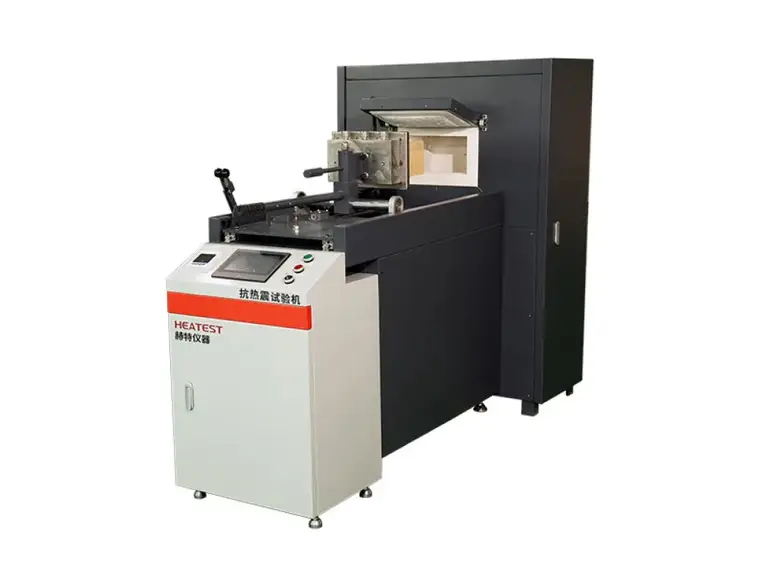
Not all thermal chambers are created equal. For electronics reliability testing, equipment must deliver precise, uniform, and repeatable temperature environments. The following attributes separate professional‑grade solutions from basic ovens.
Temperature Uniformity and Stability
The test volume must maintain temperature within tight tolerances (typically ±2°C or better) across all points. Poor uniformity leads to over‑testing some samples and under‑testing others, invalidating results. High‑end chambers employ multiple heating zones, high‑velocity air circulation, and optimized duct designs to achieve uniformity even at the upper limit of 300°C or beyond. HEATEST Instrument chambers are engineered with advanced airflow systems that guarantee ±1.5°C uniformity across the entire workspace.
…
Click here for more details on high-temperature testing equipment used for the reliability testing of electronic products: https://www.lyheatest.com/tester-knowledge/high-temp-test-equipment/

