
Glass processors today face a twofold pressure: the constant need to lower production costs and stricter environmental obligations to reduce waste. Every cutting mistake, underutilized sheet, and suboptimal layout directly chips away at profit margins. Traditional manual nesting—arranging parts on a sheet by eye—simply cannot deliver the precision and speed required to stay competitive. Smart nesting software offers a proven answer, using advanced algorithms to compute the most efficient cutting arrangements in seconds. This article examines how intelligent nesting helps glass companies minimize waste, maximize yield, and why DISAI has become a trusted name in this technology.
The Hidden Cost of Glass Waste
In glass fabrication, waste arises from multiple points: the border around cut pieces, unavoidable offcuts, rejected parts due to layout errors, and suboptimal placement that leaves large unusable areas. While a single offcut may seem insignificant, combined over a production shift they represent a substantial loss of raw material. For many factories, the difference between an average nesting layout and an optimized one can amount to 5-15% more usable surface per sheet. This is not just a minor efficiency gain—it directly impacts the bottom line. более того, glass waste is not easily recycled in every facility. Discarded pieces often end up as cullet, increasing disposal costs and risking environmental compliance issues. Reducing waste at source is the most sustainable and economical strategy.
How Smart Nesting Software Works
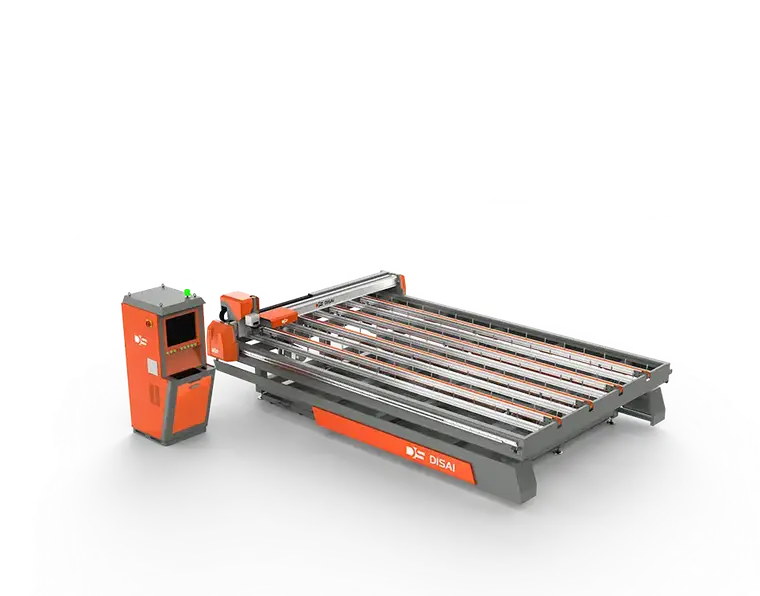
Smart nesting replaces manual placement with algorithmic design. The software receives the list of required glass parts and their dimensions, then calculates a cutting layout that occupies the smallest possible area. It automatically rotates pieces, aligns edges, and adjusts spacing according to cutting thickness and safety margins. Modern nested planning goes far beyond simple rectangles, handling complex polygons, beveled edges, and cutout shapes. The result is a dense packing that would be almost impossible to achieve manually.
Automatic Layout Optimization
The core of smart nesting is an optimization engine that evaluates thousands of possible combinations at high speed. Unlike a human operator, the software does not tire, does not follow habits, and does not overlook critical overlaps. It balances part orientation, grain direction restrictions, and required quality standards to generate a layout that minimizes waste. For glass, special attention is paid to avoiding stress points and respecting the cutting sequence to prevent breakage.
…
Click here for more details on using intelligent nesting software to reduce glass waste: https://www.disaiglass.com/industry-news/reduce-glass-waste/
