
Choosing between a single-row and a double-row slewing bearing is a critical decision that directly impacts the performance, durability, and cost-efficiency of your rotating equipment. Whether you are designing a new crane, excavator, wind turbine, or robotic arm, the wrong selection can lead to premature failure or unnecessary expense. This article provides a professional, side-by-side comparison of single-row and double-row slewing bearings, covering structural differences, load capabilities, stiffness, maintenance, and typical applications. With insights from LYMC, a leading manufacturer of precision slewing bearings, you will gain the clarity needed to make an informed choice.
Understanding the Basics: Single-Row and Double-Row Slewing Bearings
Single-Row Slewing Bearings
A single-row slewing bearing consists of one row of rolling elements (balls or rollers) arranged in a single raceway. This design is compact, lightweight, and cost-effective. It can handle moderate axial loads, radial loads, and tilting moments simultaneously, making it suitable for many light-to-medium duty applications. Common uses include small cranes, aerial work platforms, solar trackers, and medical equipment.
Double-Row Slewing Bearings
A double-row slewing bearing features two rows of rolling elements, usually with a larger cross-section and more robust raceways. The dual-row configuration significantly increases load capacity and stiffness, especially for tilting moments. These bearings are engineered for heavy-duty equipment such as large excavators, offshore cranes, wind turbine yaw systems, and military vehicles. They offer higher rigidity but come with increased weight, size, and cost.
Key Differences Between Single-Row and Double-Row Slewing Bearings
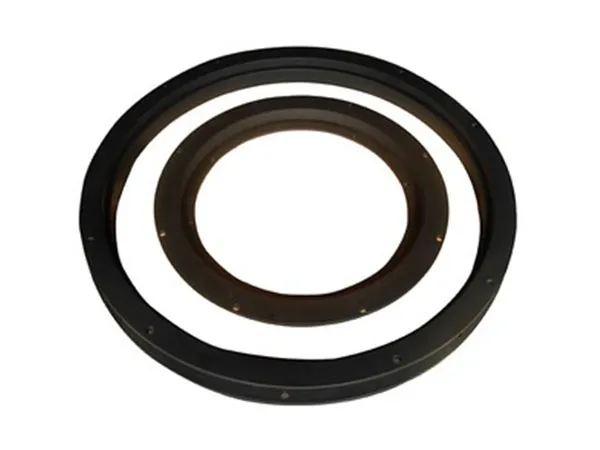
Understanding the fundamental contrasts helps narrow down your options. The table below summarizes the main differences, but we will explore each aspect in detail.
- Load Capacity: Double-row bearings can withstand significantly higher axial, radial, and moment loads due to the additional rolling elements and larger contact area.
- Stiffness: Double-row designs exhibit 30–50% higher rigidity, reducing elastic deformation under heavy loads.
- Size and Weight: Single-row bearings are more compact and lighter, ideal for space-constrained applications. Double-row bearings require larger mounting envelopes.
- Cost: Single-row bearings are generally 20–40% less expensive than equivalent double-row models, both in initial purchase and replacement.
- Maintenance and Sealing: Single-row bearings have fewer sealing points, simplifying lubrication and inspection. Double-row bearings may require more frequent maintenance due to additional raceways.
…
For more detailed information on how to choose between single-row and double-row slewing bearings, please click here: https://www.mcslewingbearings.com/a/news/slewing-bearing-compare.html

