
Industrial interiors are unsparing environments. Exposed brick, sealed concrete, visible ductwork and blackened steel glazing create a raw, structural aesthetic, but they also bring temperature swings, dust, and heavy foot traffic into the workspace. Furniture specified for these rooms has to look as though it belongs there and survive the conditions. Steel office furniture answers both requirements: it echoes the structural language of the building while offering load capacity, clean lines and a service life that wood veneer and laminate rarely match. This guide explains how steel furniture fits industrial interiors, which specifications actually matter, and how to plan a layout that stays coherent from reception through to the workshop floor.
Why Steel Suits Industrial Interiors Structurally and Visually
The industrial style is built on material honesty. Nothing is disguised: brick is left unplastered, services run exposed, and structure is celebrated rather than concealed. Steel furniture follows the same logic. A powder-coated steel desk frame, open steel shelving or a riveted metal cabinet reads as a continuation of the building rather than an object dropped into it.
Beyond appearance, steel performs where other materials degrade:
- Dimensional stability: steel does not warp, swell or delaminate when humidity fluctuates in converted warehouses and loft spaces.
- Load capacity: welded and bolted steel frames carry far more weight per millimetre of profile than timber, which matters for archive storage and equipment-heavy workstations.
- Impact resistance: in mixed office and light-production environments, steel absorbs knocks from trolleys, tooling and crates without chipping to the core.
- Cleanability: non-porous coated surfaces wipe down easily, an advantage in dusty or industrial-adjacent settings.
The visual payoff is equally practical. Steel frames are slimmer than timber equivalents, so a room with a low ceiling or a dense grid of columns gains an impression of space rather than losing it.
Matching Steel Furniture to the Industrial Aesthetic
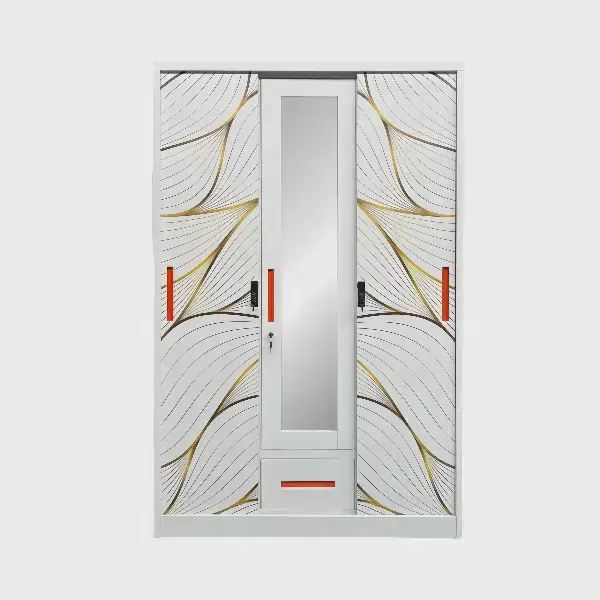
Industrial design is not a single look. A converted textile mill, a fabrication workshop with a mezzanine office, and a stripped-back tech studio each call for a different treatment. The two variables that control the result are finish and proportion.
Finish and Colour Selection
Powder coating is the standard for office-grade steel because it produces a hard, uniform film with good resistance to abrasion and mild chemicals. Common directions include:
…
For more details on steel office furniture suitable for industrial-style interior design, please click here: https://www.lakshyofurniture.com/news-center/steel-office-fit/

