
In glass processing, cutting is never a single action. It is a two-stage sequence: scoring, where a precision wheel creates a shallow fissure on the glass surface, and breaking, where controlled force travels along that fissure to separate the sheet cleanly. While scoring often receives most of the attention in technical literature, the breaking step is where real-world edge quality is won or lost. A perfect score line followed by a poor break produces chipped edges, unwanted stress fractures, and wasted material. For fabricators aiming to maximize yield and deliver clean, consistent components, mastering the breaking step is not optional — it is essential. This article examines the mechanics, variables, and technology that define this critical phase of glass cutting.
The Role of Breaking in the Two-Stage Glass Cutting Process
Every glass cutting operation begins with a scoring wheel that creates a controlled crack — known as the score line — on the surface of the glass. This line is typically only 10 to 20 percent of the glass thickness deep. The purpose of scoring is not to cut through the glass, but to establish a path of least resistance for the subsequent separation.
The breaking step, sometimes referred to as snapping or separating, applies a calculated bending force to the sheet so that the score line opens and propagates vertically through the thickness of the glass. When executed correctly, the break follows the score line precisely, producing a clean edge perpendicular to the surface. When executed poorly, the break deviates from the score line, producing scalloped edges, stress cracks, or uneven separation that renders the piece unusable.
The Technical Principles Behind the Breaking Step
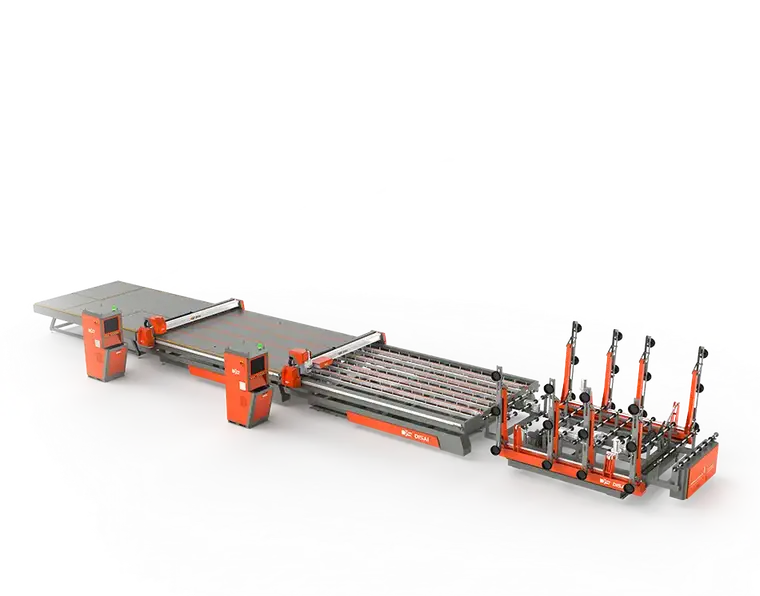
To understand why the breaking step demands careful attention, it is necessary to examine the underlying mechanics of glass fracture.
How the Score Line Guides the Break
The score wheel creates a small crack — the median crack — that penetrates into the glass thickness. This crack acts as a stress concentrator. When bending force is applied to the sheet, the tensile stress concentrates at the tip of the median crack, causing it to propagate downward in a controlled manner. The depth and geometry of the median crack directly influence how the glass will break, which is why scoring parameters — wheel angle, pressure, and speed — must be precisely matched to the glass type and thickness.
…
For more detailed information on the fracturing steps involved in glass cutting, please click here: https://www.disaiglass.com/industry-news/breaking-step/
