
En la construcción de túneles, El tiempo del ciclo determina directamente el costo del proyecto y los plazos de entrega.. Si bien los encofrados para túneles circulares y rectangulares se utilizan ampliamente, Los datos de campo recientes y la mecánica estructural revelan una clara ventaja para los sistemas circulares cuando la velocidad es la métrica principal.. Este artículo desglosa las razones operativas y de ingeniería por las que el encofrado para túneles circular supera consistentemente a las alternativas rectangulares en velocidad de construcción., y cómo las soluciones especializadas de encofrado circular de Gaofei ayudan a los contratistas a lograr ciclos de vertido más rápidos sin comprometer la seguridad ni la calidad..
Eficiencia geométrica: Por qué la forma dicta la velocidad
La distribución uniforme de la carga reduce el tiempo de configuración
Una sección transversal circular resiste naturalmente la presión interna y externa mediante pura compresión.. Esto significa que la experiencia de los paneles de encofrado momentos de flexión mínimos, permitiendo marcos más ligeros pero más rígidos. Para contratistas, Esto se traduce directamente en un montaje y desmontaje más rápido porque se requieren menos tirantes y refuerzos externos.. En contraste, El encofrado rectangular debe soportar importantes tensiones de flexión en las esquinas y en los tramos planos., requiriendo un refuerzo más pesado, comprobaciones de alineación adicionales, y procedimientos de atornillado más largos que añaden horas por ciclo.
Eliminación de concentraciones de estrés.
Las formas rectangulares sufren puntos débiles inherentes en las esquinas, donde con frecuencia se producen grietas y desalineaciones de los paneles.. Estos defectos exigen una intervención in situ: rectificado, parchear, o realineación, lo que interrumpe el programa de vertido continuo. Encofrado circular, a propósito, distribuye la tensión uniformemente a lo largo de su curvatura, eliminar fallas relacionadas con las esquinas. Sistemas de encofrado para túneles circulares de Gaofei están diseñados con precisión con paneles curvos continuos que mantienen la integridad estructural durante cientos de vertidos, reducir drásticamente el tiempo de inactividad no programado.
Ventajas operativas: Tiempos de ciclo más rápidos en la práctica
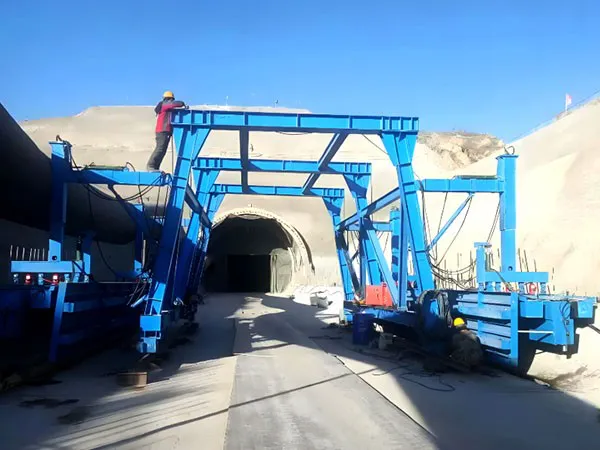
Desmontaje y reubicación rápidos
La rigidez inherente de una forma circular permite quitar el encofrado antes que los sistemas rectangulares.. El hormigón alcanza suficiente resistencia autoportante más rápido en un perfil circular porque se minimizan las tensiones de tracción.. Gaofei diseña sus formas circulares con mecanismos de retracción hidráulica que permiten el desmontaje con un solo operador en menos 10 minutos, mientras que las formas rectangulares a menudo requieren la retirada secuencial de los paneles laterales con ayuda de una grúa. Esta diferencia, a menudo 30 a 45 Minutos por ciclo: se acumula significativamente en un kilómetro de túnel..
Alineación y agrupamiento simplificados
El encofrado circular se desplaza siguiendo una trayectoria radial predecible. Usando un pivote central o sistema de trineo rodante, todo el conjunto se puede mover a la siguiente estación con un solo movimiento coordinado. Las formas rectangulares requieren una alineación independiente de cada pared y plataforma., Exigiendo múltiples puntos de estudio y ajustes manuales.. Los estudios de campo muestran que mover un segmento circular de 6 metros normalmente toma la mitad del tiempo que mover una unidad rectangular equivalente., produciendo un inmediato 50% reducción del trabajo de reposicionamiento.
…
Para obtener información más detallada sobre por qué el encofrado para túneles circulares es más rápido que el encofrado rectangular, por favor haga clic para visitar: https://www.gf-bridge-tunnel.com/a/blog/circular-vs-rectangular-speed.html

