
Every workshop that works with glass knows the frustration of a score that drifts off its line. What starts as a small deviation at the cutting edge becomes a ruined panel by the time you break it. A straight-line glass cutter exists to eliminate that variable. Instead of relying on the steadiness of a hand and eye, this tool mechanically controls the cutting wheel’s path, pressure, and depth. For workshop owners deciding between adding more hand tools or upgrading to better equipment, the straight-line glass cutter sits squarely in the second category—a practical investment that changes your workflow, not just your inventory.
The Hidden Cost of Hand Scoring
Hand-cutting glass with a manual cutter feels efficient at first. There is no setup time, and an experienced operator can move quickly. But when you track the full cost of hand scoring, the picture changes dramatically over a full production shift.
Inconsistent Pressure, Inconsistent Results
Manual scoring depends on the operator’s arm strength, hand angle, and fatigue level. A score that is too shallow won’t break cleanly. A score that is too deep creates micro-chipping along the edge, which shows up after tempering or lamination. Both outcomes lead to scrapped glass and rework orders that eat into your margin.
Misaligned Lines Multiply Waste
The longer the cut, the more visible the drift. A hand-cut line on a 3-meter sheet of glass can wander by a millimeter or more at the far end. That millimeter seems small until you’re cutting to tight tolerances. In real production, even a skilled operator will generate occasional off-angle pieces that cannot be used in finished goods.
When manual scoring error typically accounts for between 2 and 5 percent of wasted material per shift—depending on operator experience—the annual cost becomes significant. Material that could have become a finished product instead goes straight into the scrap bin, and that cost compounds every single working day.
What a Straight-Line Glass Cutter Brings to Your Workshop
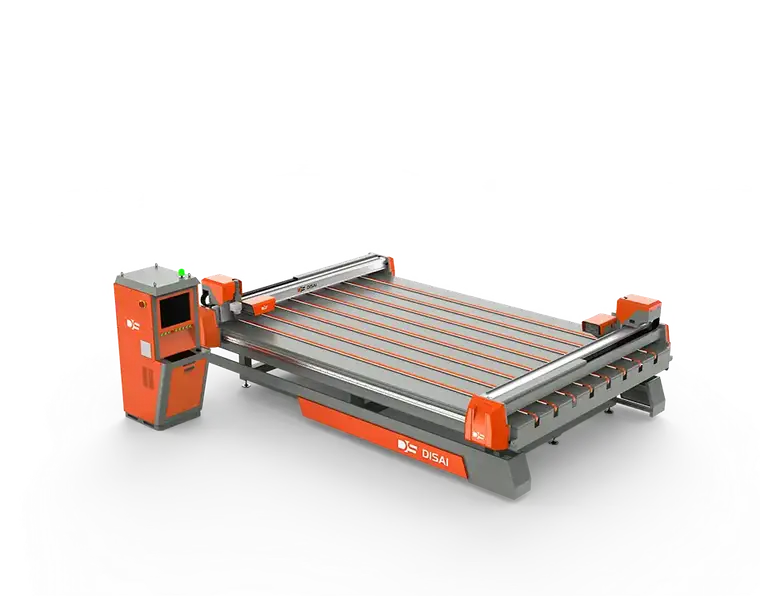
A straight-line glass cutter is not a complex machine. It is a precisely engineered guide system that mounts a scoring head on a rigid beam or rail. The glass slides beneath it, or the head moves across the glass, holding a consistent angle and cutting pressure through the entire length of the score.
Mechanical Consistency Replaces Manual Judgment
The cutting head uses a carbide or diamond scoring wheel, mounted at a fixed angle. The pressure is set once and does not change while cutting. That means the score depth is uniform from start to finish, regardless of who operates the machine or how long they have been on shift. Results no longer vary between the first cut of the morning and the last cut before lunch.
…
Click here for more details on why your workshop needs a straight-line glass cutting machine: https://www.disaiglass.com/industry-news/glass-cutter-guide-1/
