Choosing the right aluminum coil thickness is a critical decision that balances performance, cost, and manufacturability. Selecting the wrong thickness can lead to product failure, increased costs, or manufacturing problems.It depends heavily on the specific application and its requirements.

Step-by-Step Guide to Choosing Aluminum Coil Thickness

Aluminum Coil

Step 1: Define Your Application (What are you making?)

This is the most important question. The end-use dictates almost all other requirements.

Structural: Is it a load-bearing roof panel or a truck body?

Architectural: Is it decorative siding, a sign, or a gutter?

Packaging: Is it a beverage can lid?

Industrial: Is it for HVAC ductwork or heat exchangers?

Step 2: Assess Structural and Performance Requirements

Once you know the application, determine the forces it must withstand.

Load-Bearing Capacity: Will it need to support weight (like snow on a roof) or resist pressure (like wind against a wall)? Thicker coils provide greater strength and stiffness.

Impact and Dent Resistance: Will the product be in a high-traffic area or exposed to potential impacts like hail or gravel? A thicker coil is much more resistant to denting.

Rigidity and Flatness: For large, flat surfaces like architectural panels or signs, thin material can appear wavy or distorted, a phenomenon called “oil canning.” A thicker coil provides the necessary rigidity to keep the surface flat and smooth.

Step 3: Consider the Manufacturing Process

How will you turn the coil into a final product?

Bending and Forming: Thinner aluminum is much easier to bend. Thicker material requires more powerful machinery and has a larger minimum bend radius (you can’t make as sharp a corner without it cracking).

Stamping and Drawing: Deep-drawing processes (like making a can) require very specific, often thin, and highly formable alloys.

Welding: Thicker materials are generally easier to weld than very thin materials, which can burn through easily.

For more details on how to choose the right aluminum coil thickness, please click here: https://www.dw-al.com/a/news/aluminum-coil-thickness-choose.html

Color coated aluminum coil is a high value-added aluminum product made by coating one or more layers of organic coatings (such as polyester PE, polyvinylidene fluoride PVDF, silicone-modified resin SMP, etc.) on aluminum coil after degreasing and chemical treatment, and curing by high temperature baking. With excellent decorative, weathering and processing properties, it is widely used in construction, decoration, transportation, home appliances and other fields.

Color Coated Aluminum Coil Benefits

1. Aesthetic Appeal and Versatility:

Wide Range of Colors and Finishes: It comes in an extensive palette of vibrant and attractive colors, as well as different textures (matte, glossy, metallic, wood grain, stone grain). This allows for significant design flexibility and customization to meet specific architectural or product requirements.

Uniform Color and Finish: The coil coating process ensures a consistent and uniform application of paint, avoiding the unevenness often seen in spray painting.

High Gloss Retention: Quality coatings maintain their gloss and color stability over time, resisting fading and chalking even with prolonged exposure to sunlight and weather.

2. Durability and Protection:

Corrosion Resistance: Aluminum naturally resists corrosion, and the applied paint systems further enhance this property. This makes it ideal for outdoor applications and in environments with harsh weather conditions or exposure to chemicals.

Weather Resistance: High-quality coatings, especially fluorocarbon (PVDF) paints, provide excellent resistance to UV radiation, moisture, extreme temperatures, and other environmental stresses, preventing degradation and ensuring long-term performance.

Scratch and Stain Resistance: The baked-on coatings are tough and durable, providing resistance to scratches and stains, which helps maintain the material’s aesthetic appeal.

Fire Retardant: Aluminum is not combustible and has a high melting point, making it a safe material in case of fire.

3. Cost-Effectiveness and Efficiency:

Reduced Maintenance: The durable and resistant coatings require minimal maintenance, leading to long-term cost savings compared to materials that need frequent repainting or repairs.

Streamlined Manufacturing: Pre-painted coils eliminate the need for in-house painting operations, saving on labor, equipment, and operating costs (including those related to environmental compliance). Manufacturers can focus on fabrication and assembly.

Faster Production Cycles: By using pre-painted materials, businesses can significantly reduce production times as there’s no need for separate painting, drying, and curing stages.

For more detailed information about the benefits of color coated aluminum coil, please click here:https://www.dw-al.com/a/news/color-coated-aluminum-coil-benefits.html

Tunnel formwork operations present unique safety challenges due to the confined nature of the work, potential for ground instability, and the use of heavy equipment and materials. Adherence to stringent safety standards is crucial to prevent accidents, injuries, and fatalities.

Safety Standards for Tunnel Formwork Operation

Tunnel Formwork

Here’s a breakdown of key safety standards and considerations for tunnel formwork operations, drawing from various regulations and best practices:

I. General Safety Management and Planning:

Competent Person: A “competent person” (as defined by relevant regulations like OSHA) must be responsible for carrying out and overseeing numerous safety requirements, including inspections, hazard identification, and implementing control measures.

Risk Assessment: A systematic process of identifying hazards, assessing risks, and implementing effective control measures is paramount. This includes:

Site Assessment: Evaluating the site for uneven terrain, overhead obstructions, environmental factors (e.g., adverse weather).

Hazard Identification: Recognizing potential for structural instability, falls, falling objects, manual handling injuries, and structural failures.

Emergency Planning: Developing and training personnel on emergency procedures, including evacuation plans, flood control, fire prevention, and rescue.

Communication: Effective communication systems (voice, power-assisted where natural voice is ineffective) must be maintained between the work face, shaft bottom, and surface.

Check-in/Check-out Procedure: A system to accurately track personnel underground is essential to ensure accountability in emergencies. At least one designated person must be on duty above ground.

Training: All employees involved in underground construction must be trained to recognize and respond to hazards. Training should be tailored to the specific job site and cover topics like:

Air monitoring and ventilation

Illumination

Communications

Flood control

Personal Protective Equipment (PPE)

Emergency procedures and evacuation plans

Check-in/check-out procedures

For more detailed information on safety standards for tunnel formwork operations, please click hereg:https://www.gf-bridge-tunnel.com/a/blog/safety-standards-for-tunnel-formwork-operation.html

Preventing concrete leakage in tunnel lining formwork is crucial for the structural integrity, durability, and aesthetics of the tunnel. Leakage can lead to honeycombing, voids, exposed rebar, and ultimately compromise the lining’s performance.

How to prevent concrete leakage in tunnel lining formwork

tunnel lining formwork

I. Formwork Design and Fabrication:

Tight Joints: This is paramount. Formwork panels must be precisely manufactured and assembled to ensure minimal gaps.

Sealing Materials: Use appropriate sealing strips, gaskets, or expandable foam at all joints between formwork panels and at interfaces with existing structures.

Overlapping: Where possible, design formwork panels with overlapping sections to create a tighter seal.

Rigidity and Strength: The formwork must be strong enough to withstand the pressure of fresh concrete without deformation or deflection, which can create gaps.

Adequate Bracing and Support: Ensure the formwork is properly supported and braced to prevent movement during concrete placement and vibration.

Through-Ties and Wall Bolts: Use sufficient and correctly installed through-ties or wall bolts to secure the formwork. Ensure these penetrations are sealed effectively after removal.

Cleanliness and Release Agent:

Clean Surfaces: Before concrete pouring, thoroughly clean the formwork surfaces to remove any debris, dust, or hardened concrete that could prevent a tight seal.

Release Agent Application: Apply a suitable release agent evenly to the formwork surface. This facilitates easy stripping and helps prevent concrete from sticking to the formwork, which can damage the concrete surface and lead to leakage paths during subsequent pours.

Precision in Dimensions: The formwork should be manufactured to precise dimensions to ensure a snug fit and minimize gaps.

II. Construction Practices During Concrete Pouring:

Concrete Mix Design:

Appropriate Slump: Use a concrete mix with the correct slump (workability) for tunnel lining. Too high a slump can lead to excessive bleeding and segregation, while too low a slump can make compaction difficult and increase the risk of voids.

For more details on how to prevent concrete leakage from tunnel lining formwork, please click here:https://www.gf-bridge-tunnel.com/a/blog/preventing-concrete-leakage-from-tunnel-lining-formwork.html

Lining trolleys, primarily used in tunnel construction for the secondary lining process, are critical pieces of equipment that ensure the quality, efficiency, and safety of concrete lining. Their design specifications are complex and tailored to the specific demands of tunneling projects.

Lining Trolley Design Specifications

Lining trolleys

I. Core Functions and Types

Before diving into specifications, it’s crucial to understand the fundamental roles and variations of lining trolleys:

Primary Function: To support the formwork (shuttering) for cast-in-place concrete linings, or to position and install precast concrete segments for the inner wall of a tunnel. They help achieve the required surface shape, size, and finish of the tunnel lining.

Types (based on functionality, tunnel shape, and construction method):

Cast-in-Place (CIP) Trolleys: Most common, these carry large steel formwork sections. Concrete is pumped behind the formwork, and once cured, the trolley strips the formwork and moves to the next section.

Full-Round Formwork Trolley: For circular or near-circular tunnels, supporting the entire cross-section (invert, walls, arch).

Arch (or Crown/Sidewall) Formwork Trolley: For horseshoe or D-shaped tunnels, where the invert is cast separately.

Telescopic Formwork Trolley: Sections retract inwards for efficient movement through previously cast lining.

Precast Segmental Lining Trolleys (Segment Erectors): Used in TBM (Tunnel Boring Machine) tunnels, they transport, position, and install precast concrete segments.

Self-Propelled vs. Towed: Some have their own drive systems, others are moved by external machinery.

Rail-Mounted vs. Wheeled: Depending on the tunnel floor conditions and required stability.

Lining trolleys

II. Key Design Specifications and Considerations

The design of a lining trolley must balance structural integrity, operational efficiency, adaptability, and safety.

For more detailed information on the design specifications for lining carts, please click here:https://www.gf-bridge-tunnel.com/a/blog/lining-trolley-design-specifications.html

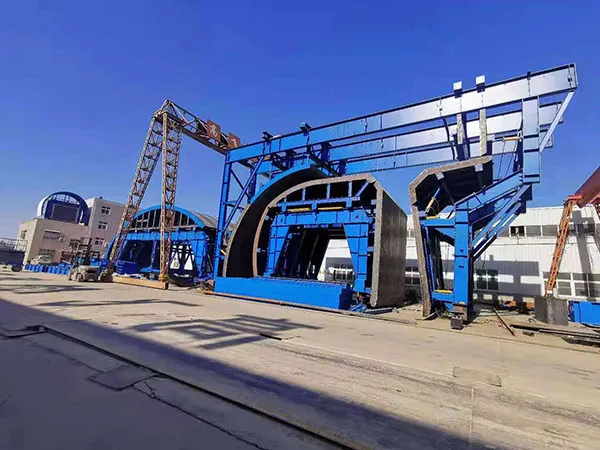
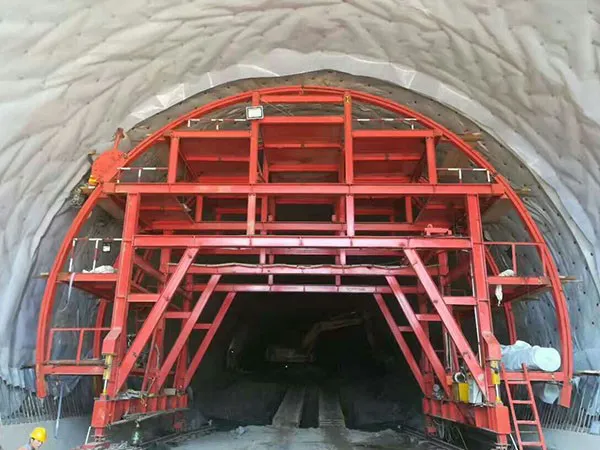
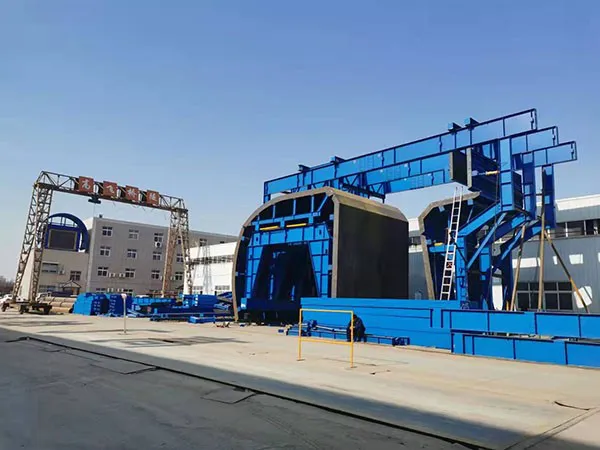
In modern tunnel construction, the tunnel lining trolley—also known as a formwork trolley or lining formwork system—is a crucial piece of equipment used to support and shape the inner concrete lining of tunnels. As tunnels are built in various geological conditions and for different purposes (such as transportation, mining, or water conveyance), the choice of lining trolley can significantly impact construction efficiency, structural quality, and overall project cost.

Considerations for Selecting Tunnel Lining Trolley

tunnel lining trolley

Choosing the right lining trolley is crucial for the efficiency, safety, and cost-effectiveness of any tunnel project.

Tunnel Dimensions and Geometry (Cross-section and Length):

Tunnel Cross-section: The shape and size of the tunnel (e.g., circular, horseshoe, rectangular, large-span, small-span) will dictate the formwork design and, consequently, the type and dimensions of the lining trolley. Different trolleys are designed for highway tunnels, railway tunnels, subway sections, water diversion tunnels, etc., each with specific lining length capabilities (e.g., 4.5m to 15m).

Lining Length: The required length of each concrete lining segment will influence the trolley’s design and capacity. Longer segments can reduce casting cycles but require a more robust and possibly longer trolley.

Inclination/Slope: For inclined shafts, specialized trolleys with four active wheels or hydraulic wheel-less structures are needed to handle the steep slopes.

Level of Automation and Control:

Manual vs. Hydraulic vs. Smart/Automated: Lining trolleys range from simple, manually operated systems to fully hydraulic automatic walking trolleys and even “smart” trolleys with integrated automatic pouring, vibrating, and monitoring systems.

Efficiency and Labor Cost: Highly automated systems can significantly improve working efficiency, reduce labor intensity, and accelerate lining speed, but come with a higher initial investment. Simple trolleys might be suitable for shorter tunnels or projects with less stringent timelines.

Precision and Quality: Advanced systems offer better control over the concrete pouring process, minimizing defects like voids, insufficient thickness, and cracks, leading to a higher quality tunnel lining.

For more details on the five key factors to consider when selecting a lining carriage for tunnel projects, please click here:https://www.gf-bridge-tunnel.com/a/blog/considerations-for-selecting-tunnel-lining-trolley.html

Abnormal noise in a double-row ball slewing bearing can indicate a range of issues, from minor lubrication problems to significant component damage. Addressing the noise promptly is crucial to prevent further damage and ensure the longevity of the bearing and the machinery it supports.

Diagnosis of abnormal noise of double-row ball slewing bearing

double-row ball slewing bearing

Here are the common methods to solve abnormal noise in double-row ball slewing bearings, categorized by their underlying causes.

I. Addressing Lubrication Issues:

Insufficient Lubrication: This is one of the most common causes.

Solution: Regularly add the appropriate type and amount of grease. Follow the manufacturer’s recommended lubrication schedule. If the bearing has been dry for a while, it may require more frequent lubrication initially.

Poor Quality or Aged Grease: Grease can degrade over time, losing its lubricating properties.

Solution: Clean out the old, contaminated, or degraded grease and replace it with fresh, high-quality lubricant suitable for the bearing’s operating conditions (temperature, load, speed).

Uneven Grease Filling: Inadequate or uneven distribution of grease can lead to localized friction and noise.

Solution: Ensure the grease is evenly distributed throughout the raceway during lubrication. Running the bearing for a few rotations after greasing can help with distribution.

II. Resolving Contamination and Debris Problems:

Foreign Particles: Dirt, dust, metal shavings, or other debris entering the bearing can cause friction, wear, and noise. This often results in a “dust sounding” or “rattling” noise.

Solution: Disassemble the bearing (if feasible and necessary), thoroughly clean the raceway and rolling elements, and remove all foreign matter.

Prevention: Improve sealing arrangements to prevent contaminant ingress. Regularly clean the surrounding area of the bearing.

For more detailed information on how to resolve abnormal noise in double row ball slewing bearings, please click heren: https://www.mcslewingbearings.com/a/news/double-row-slewing-bearing-noise-diagnosis.html

Double-row slewing bearings are critical components in heavy machinery, designed to handle significant axial, radial, and moment loads while enabling rotational movement. Due to the demanding environments they operate in, they are susceptible to various faults. Understanding these common issues and their solutions is crucial for maintaining equipment performance and longevity.

Common Faults of Double-Row Slewing Bearings

Double-Row Slewing Bearings

Abnormal Noise (Clicking, Grinding, Squealing, or Rattling):

Causes:

Insufficient or Improper Lubrication: Lack of grease, deteriorated grease, or using the wrong type of lubricant.

Foreign Objects in Raceway: Dust, dirt, metal particles, or other debris entering the bearing.

Severe Raceway or Rolling Element Wear: Pitting, spalling, or other damage due to fatigue, corrosion, or contamination.

Loose Mounting Bolts: Allowing movement between the bearing and its mounting surface.

Poor Meshing of Gears: Improper clearance between the slewing bearing’s gear and the pinion, or damaged/broken teeth.

Bearing Overload: Exceeding the bearing’s design load capacity.

Internal Faults: Such as a damaged cage, inner/outer ring, or balls.

Symptoms: Loud, unusual sounds during rotation, especially under load.

Lack of Flexibility in Rotation (Stiffness, Slow Movement, or Jamming):

Causes:

Insufficient Lubrication: Grease becoming viscous, especially in cold weather, or simply not enough lubrication.

Foreign Objects in Raceway: Blocking the rolling elements.

Overload Operation: Causing damage to the raceway.

Improper Installation: Uneven mounting surface, resulting in uneven force distribution or the bearing being in a negative clearance state.

Damaged Sealing Strips: Allowing foreign objects or moisture to enter.

Bearing Deformation: Due to excessive load or manufacturing defects.

Excessive Clearance: Leading to “wild movement” or looseness.

Symptoms: Difficulty in rotating the slewing platform, jerky movement, or complete inability to rotate.

For more detailed information about common faults and solutions for double-row slewing bearings, please click here:https://www.mcslewingbearings.com/a/news/common-faults-and-solutions-for-double-row-slewing-bearings.html

Replacing a double-row ball slewing bearing is a complex and critical procedure that typically requires specialized knowledge, equipment, and adherence to manufacturer guidelines. It’s not a DIY job for most individuals, especially given the heavy machinery and safety implications involved.

This is a general overview, and you MUST consult the specific manufacturer’s manual for your equipment and bearing model for precise instructions and safety protocols.

Double-row Ball Slewing Bearing Replacement

Double-row Ball Slewing Bearing

I. Pre-Replacement Assessment and Preparation:

Safety First:

Disconnect Power: Ensure the machinery is completely de-energized and all power sources are locked out/tagged out.

Secure the Load: If the bearing supports a structure (e.g., crane boom, excavator arm), secure it properly to prevent accidental movement.

Personal Protective Equipment (PPE): Wear appropriate PPE, including hard hat, safety glasses, gloves, and steel-toed boots.

Stable Position: Ensure the entire machine is in a stable position before starting any work.

Assessment of Existing Bearing:

Thoroughly inspect the old bearing for signs of wear, damage, corrosion, or any other issues that might have led to its failure. This can provide insights into potential root causes.

Check for loose bolts, seal integrity, and any abnormal noises or movements.

Gather Necessary Tools and Equipment:

Heavy-duty lifting equipment (cranes, forklifts, hoists).

Torque wrenches (calibrated for high torque values).

Specialized tools for removing and installing large bolts.

Feeler gauges for checking flatness and gaps.

For more information on how to replace double row ball slewing bearings, please click here:https://www.mcslewingbearings.com/a/news/double-row-ball-slewing-bearing-replacement.html

Double-row slewing bearings are crucial components in many heavy-duty machines, and noise can be a significant indicator of an underlying problem. Troubleshooting the noise involves a systematic approach to identify the cause and implement the correct solution.

Double row slewing bearing noise troubleshooting

Double-row slewing bearings

1. Identify the Type of Noise and When it Occurs:

Normal Sounds: A new slewing bearing might produce a soft, uniform rolling sound of steel balls. This is usually normal and may fade after some rotation.

Abnormal Loud Noise: This indicates a problem and requires attention.

Grinding, Popping, Clicking, or Cracking: These are strong indicators of issues.

When does it occur?

New Bearing (before/after installation): Could be slight deformation from transport or improper installation.

Bearing in Service (after some use): Likely wear, lubrication issues, contamination, or loose components.

Under Load vs. No Load: Helps differentiate between issues related to stress and more general problems.

2. Initial Checks (General Troubleshooting):

Confirm the Source: Is the noise definitely coming from the slewing bearing? Sometimes, noises from other steel structures or components can be mistaken for bearing noise. Try stopping the slewing ring’s rotation while other components continue to work to isolate the sound.

Lubrication: This is often the first and easiest thing to check.

Lack of Grease: Insufficient or aged grease can cause rolling elements and separators to rub, creating noise. Timely greasing (every 100-250 hours of operation, or more frequently in harsh conditions) can often eliminate this.

Inspect Purged Grease: When you pump new grease into the bearing, observe the old grease that is purged out. If you see grit, metal particles, or flakes, it indicates wear or contamination.

Incorrect Lubricant: Using the wrong type of grease or one with unsuitable viscosity can also lead to poor lubrication and noise.

Oil Leakage: Check for signs of oil leakage, which can indicate damage to seals or improper lubrication practices.

For more detailed information on how to troubleshoot noise problems with double-row slewing bearings, please click here:https://www.mcslewingbearings.com/a/news/double-row-slewing-bearing-noise-troubleshooting.html