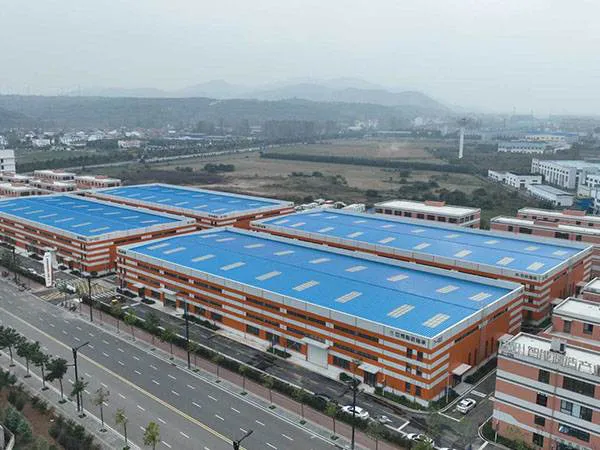
Seismic design of steel structures is based on several key principles aimed at ensuring life safety, minimizing damage, and maintaining functionality during and after an earthquake. These principles leverage the inherent properties of steel, such as its strength and ductility.

Seismic Design Principles for Steel Structures

Steel Structures

Ductility and Energy Dissipation (Inelastic Behavior):

It’s generally not economical to design structures to remain purely elastic during a major earthquake. Instead, the design philosophy allows for controlled inelastic deformation (yielding) in specific, pre-determined locations within the structure.

Steel is an excellent material for this due to its high ductility, meaning it can deform significantly beyond its elastic limit without fracturing.

This inelastic deformation dissipates seismic energy, reducing the forces transmitted to the rest of the structure and the building’s contents.

This is often achieved through the formation of “plastic hinges” in beams or other designated “fuse” elements.

Capacity Design:

This is a crucial principle that ensures a hierarchy of strength within the structural system. The idea is to force inelastic action (energy dissipation) to occur in ductile elements (e.g., beams, special connections) while ensuring that brittle elements (e.g., columns, foundations, critical connections) remain elastic and retain their strength.

This prevents a sudden and catastrophic collapse. For instance, in moment-resisting frames, the “strong column-weak beam” concept is applied, where columns are designed to be stronger than the beams framing into them, ensuring that plastic hinges form in the beams rather than the columns.

Steel Structures

Redundancy:

A redundant structural system provides multiple load paths, meaning if one element or path fails, the loads can be redistributed to other elements, preventing progressive collapse. This enhances the overall robustness of the structure under seismic loading.

For more detailed information on the principles of seismic design for steel structures, please click here:https://www.meichensteel.com/a/news/seismic-design-principles-for-steel-structures.html

Prefabricated steel structures have become a popular choice in modern construction due to their strength, durability, and cost-effectiveness. One of the most common questions buyers and contractors have is about the price per ton of prefabricated steel. The price per ton of prefabricated steel structure can vary significantly due to several factors, including the type of steel, complexity of fabrication, project size, supplier, market conditions, and location.

Prefabricated Steel Structure Price Per Ton

Prefabricated steel structures

Based on current information (late 2024 – mid 2025):

Raw Steel Prices: Raw steel prices have fluctuated, with recent figures around $700-$900 per ton. Some sources indicate prices reaching up to $1100 per ton in 2025 due to potential tariffs and market uncertainties.

Fabricated/Structural Steel Prices (including raw material, fabrication, and delivery): You can expect to see prices for structural steel, which includes the raw material, fabrication, and often delivery, ranging from $300 to $750 per ton for certain components or larger projects, though some sources list ranges of $400-$700 per ton for general structural steel. Some suppliers may quote as low as $10-$80 per ton for specific, large-volume components or very basic structures, while others may list a broader range up to $650 per ton.

Installed Prefabricated Steel Structures (including raw material, fabrication, delivery, and installation): When considering the full cost of a prefabricated steel structure, which includes the raw steel, fabrication, delivery, and installation on-site, the price per ton is often incorporated into a per-square-foot cost. However, one source explicitly states that the price per ton of structural steel erected on site (including raw steel, fabrication, delivery, and installation) is around $4,000 per ton.

Important Considerations that influence the price:

Prefabricated steel structures

Project Scope and Complexity: Larger and more complex designs with specialized components will generally have a higher cost per ton.

Steel Grade and Type: Different grades (e.g., Q235, Q345B) and types of steel (e.g., H-beams, I-beams, galvanized) have varying costs.

For more details about the price per ton of prefabricated steel structures, please click here:https://www.meichensteel.com/a/news/prefabricated-steel-structure-price-per-ton.html

The cost per square meter for a steel structure workshop can vary significantly, ranging from as low as $10 to $25 per square foot (approx. $107-$269 per square meter) for basic kits, to $20 to $50 per square foot (approx. $215-$538 per square meter) for fully installed prefab buildings, and even $50 to $200+ per square foot (approx. $538-$2150+ per square meter) for custom-built or industrial-grade structures.

Factors affecting the price of steel structure workshop

steel structure workshop

1. Material Prices:

Steel market fluctuations: Global demand, tariffs, and local availability directly impact the price of steel.

Type and quality of steel: Higher-grade steel offers better durability and strength but comes at a higher cost.

Auxiliary materials: Costs for bolts, welding materials, coatings, insulation, roofing, and foundation materials also add up.

2. Design Complexity and Customization:

Standard vs. custom designs: Simple, standard structures are generally less expensive than custom designs with unique features, layouts, or aesthetics.

Building dimensions: Larger buildings require more materials, but often benefit from economies of scale, leading to a lower cost per square foot for very large structures. However, buildings above a certain width (e.g., 32 feet) may require additional structural support (webbed trussing), increasing costs.

Features and accessories: The number of doors, windows, internal walls, mezzanines, skylights, specialized wall panels, and roof styles (e.g., vertical siding vs. horizontal) all add to the material and labor costs.

Load requirements: Designs that need to withstand specific snow loads, wind loads, or seismic loads will affect the structural design and materials used, increasing costs.

3. Labor Costs:

Regional labor rates: These can vary significantly by location.

Skilled labor availability: Shortages in skilled labor can drive up wages.

Construction difficulty: Complex designs or challenging site conditions can increase labor hours.

Pre-engineered metal buildings (PEMBs): These often speed up assembly and can help lower labor costs compared to traditional construction.

DIY construction: For smaller buildings, this can save on labor but requires expertise.

4. Location and Site Preparation:

Geographical location: Material prices, labor costs, and tax policies differ by region. Remote locations may also incur higher transportation costs.

Site accessibility: Difficult-to-access sites can increase delivery and construction costs.

More about steel structure factory building price comparisons: What affects the cost per square meter? For detailed information, please click to visit:https://www.meichensteel.com/a/news/factors-affecting-the-price-of-steel-structure-workshop.html

The load capacity of a steel structure workshop is not a single, fixed number; it’s a complex calculation that depends on many factors and is determined during the engineering design process to ensure safety and functionality.

Steel Structure Workshop Load Capacity

steel structure workshop

1. Types of Loads:

Dead Loads (Permanent Loads): These are constant and include the weight of the structure itself (steel beams, columns, roof, walls), as well as fixed elements like permanent flooring, ceilings, and fixed equipment.

Live Loads (Variable Loads): These loads change over time and are due to the intended use of the workshop. They include:

Occupancy loads: Weight of people.

Equipment loads: Weight of machinery, tools, vehicles.

Storage loads: Weight of materials, inventory.

Crane loads: If the workshop has overhead cranes, these are significant dynamic loads that need careful consideration.

Environmental Loads: These are natural forces that the building must withstand:

Wind Loads: Forces exerted by wind blowing against the building. These vary with location, building height, and shape.

Snow Loads: Weight of snow accumulation on the roof, determined by local climate and roof slope.

Seismic (Earthquake) Loads: Forces generated by earthquakes, especially critical in seismically active regions.

Thermal Loads: Forces generated by temperature changes causing expansion or contraction of materials.

2. Design Standards and Codes:

Building codes (e.g., ASCE 7 in the US, Eurocodes) provide minimum design load requirements for different types of structures and occupancies. Engineers must adhere to these codes to ensure safety.

Load factors are applied to the expected loads to account for uncertainties and potential extreme events, determining the “design loads” used for sizing structural members.

steel structure workshop

3. Structural Design Considerations:

Structural System: The chosen structural system (e.g., portal frame, truss, frame structure) significantly impacts load distribution and capacity. Portal frames are common for industrial workshops with small to medium spans.

For more detailed information about the load capacity of welding positioners, please click here:https://www.meichensteel.com/a/news/steel-structure-workshop-load-capacity.html

Welding positioners are crucial pieces of equipment in fabrication and welding shops, designed to hold and manipulate workpieces, allowing welders to achieve optimal positions for welding. Understanding their load capacity is essential for safe and efficient operation.

Welding positioners are crucial pieces of equipment in fabrication and welding shops, designed to hold and manipulate workpieces, allowing welders to achieve optimal positions for welding. Understanding their load capacity is essential for safe and efficient operation.

What is Welding Positioner Load Capacity?

Welding Positioner

Welding positioner load capacity refers to the maximum weight and associated forces a positioner can safely handle while rotating and tilting a workpiece. It’s not just about the raw weight; it’s a combination of the workpiece’s weight and its center of gravity (CG).Manufacturers typically specify load capacity on a “capacity plate” or in the equipment’s documentation. This often includes:

Maximum Weight Capacity: The absolute maximum weight the positioner can hold.

Tilt Torque Load: The maximum rotational force the positioner can handle when tilting the workpiece.

Rotation Torque Load: The maximum rotational force the positioner can handle when rotating the workpiece.

Center of Gravity (CG) Distance: This is critical. The further the workpiece’s CG is from the positioner’s table surface (for tilt) or the center of the table (for rotation), the greater the torque applied to the positioner, even with the same weight.

How is Welding Positioner Load Capacity Calculated?

The load capacity is heavily influenced by the torque exerted by the workpiece on the positioner’s mechanisms (motor, gears, bearings). Torque is a twisting force, calculated as:

Torque = Weight × Distance

Here’s how this applies to positioners:

Determine the total weight of the weldment: This includes the workpiece itself, any fixtures, chucks, or tooling attached to it.

Calculate the Center of Gravity (CG) of the work:

Distance from the face of the table (for tilt torque): This is the perpendicular distance from the table surface to the workpiece’s CG.

Distance from the rotational center of the table (for rotation torque, also known as eccentricity): This is the parallel distance from the center of the table to the workpiece’s CG. For asymmetrical workpieces, this is crucial.

For more detailed information about the load capacity of welding positioners, please click here:https://www.bota-weld.com/en/a/news/welding-positioner-load-capacity.html

Welding positioner torque requirements are crucial for selecting the right equipment to safely and efficiently manipulate a workpiece during welding. Understanding these requirements ensures the positioner can handle the weight and dimensions of your weldment without damage or instability.

Welding Positioner Torque Requirements Explained

What is Torque in this Context?

In the context of welding positioners, torque refers to the rotational or twisting force that the positioner’s motors and gearing must exert to move and hold the workpiece in various orientations. There are typically two main types of torque to consider:

Rotational Torque: The force required to rotate the workpiece around its axis (e.g., spinning a pipe).

Tilting Torque: The force required to tilt the workpiece from horizontal to vertical or any angle in between.

Key Factors Affecting Torque Requirements

The torque requirements for a welding positioner are primarily determined by the characteristics of the workpiece and how it’s mounted. Here are the main factors:

Weight of the Workpiece (and Fixture): This is the most significant factor. The heavier the workpiece, the more force (and thus torque) is needed to move and hold it. Don’t forget to include the weight of any chucks, clamps, or custom fixtures used to hold the workpiece.

Center of Gravity (CG): This is the point where the entire weight of an object appears to act. Its location is critical:

Distance from the table’s rotational center (Eccentricity): For rotational torque, the further the CG is from the center of rotation, the greater the rotational torque required. This is especially important for irregularly shaped parts or those with significant offset loads (like pipe elbows or Tees).

Distance from the table’s tilting pivot point (Gravity Center Distance + Inherent Overhang): For tilting torque, the further the CG is from the tilt axis, the more tilting torque is needed. “Inherent overhang” is the fixed distance from the tilting pivot point of the table to its surface.

Workpiece Shape and Dimensions: Large, unwieldy, or asymmetrical workpieces can create larger moments (force x distance) and thus higher torque demands, even if their absolute weight isn’t extreme.

Desired Positioning Speed: While not directly a torque requirement, faster rotation or tilting speeds generally require more powerful motors, which are often associated with higher torque capabilities.

Welding Process and Material: While less direct, certain welding processes might require very precise and stable positioning, indirectly influencing the need for a robust positioner with sufficient torque to prevent any unwanted movement.

For more detailed information about torque requirements for welding positioners, please click here:https://www.bota-weld.com/en/a/news/welding-positioner-torque-requirements.html

Choosing the correct size and stroke for a welding column and boom manipulator is crucial for maximizing efficiency, quality, and safety in your welding operations. It essentially comes down to understanding the dimensions of your workpieces and the required welding processes.

How to choose welding column boom size and stroke

welding column and boom

1. Understand the Terminology:

Column (Vertical Travel/Lift): This refers to the vertical height the boom can extend up and down. It’s often expressed as the “vertical reach” or “column stroke.”

Boom (Horizontal Travel/Reach): This refers to the horizontal distance the welding head can extend outwards from the column. It’s often expressed as the “boom reach” or “horizontal stroke.”

Load Capacity: The maximum weight the end of the boom can safely support, including the welding head, wire feeder, flux recovery unit, camera systems, and any other accessories. This is critical for safety and operational stability.

2. Key Factors to Consider for Sizing and Stroke:

Workpiece Dimensions (Length, Diameter, Height):

Maximum Length of Longitudinal Welds: The boom’s horizontal stroke needs to be at least as long as the longest longitudinal weld you’ll be performing. If you’re welding very long components, you might consider a column and boom mounted on a travel car or even a gantry system for extended reach.

Maximum Diameter/Height of Circumferential Welds: The column’s vertical stroke needs to accommodate the height of your largest workpiece when mounted on a positioner or turning rolls. The boom also needs to be able to reach the top and bottom of the circumference. Consider the “minimum height under boom” and “maximum height under boom” specifications.

Minimum Diameter/Height of Workpieces: Ensure the column and boom can retract sufficiently to work on smaller pieces without interference.

Welding Process and Equipment:

Weight of Welding Head and Accessories: Submerged Arc Welding (SAW) heads with flux hoppers and recovery systems are typically heavier than MIG or TIG setups. Factor in the weight of all attachments when considering the boom’s load capacity.

Additional Equipment: If you’re adding cross-slides, seam trackers, laser pointers, or operator platforms, these will add weight and potentially affect the required reach.

Shop Layout and Space Constraints:

Overhead Clearance: Ensure there’s enough vertical space in your facility for the column to extend to its full height.

Floor Space: Consider the footprint of the column and boom, especially if it’s a movable unit on rails.

For more detailed information on how to choose the welding column arm size and stroke, please click here: https://www.bota-weld.com/en/a/news/how-to-choose-welding-column-boom-size-and-stroke.html

In modern welding automation, both welding column boom systems and welding robots play critical roles in improving efficiency, precision, and safety. While they may seem similar in purpose, these two systems are designed for different applications and operate using distinct principles. While both a welding column boom and a welding robot are automated tools used to improve welding processes, they differ significantly in their design, flexibility, and applications.

Difference Between A Welding Column Boom and A Welding Robot

Welding Column Boom (Manipulator)

Design: A column boom system typically consists of a vertical column mounted on a stable base and a horizontal boom that extends from the column. The welding head is mounted on the end of the horizontal boom. The column allows for vertical movement, and the boom provides horizontal reach. Many also allow for 360-degree rotation of the column.

Movement & Control: Column booms offer precise linear and rotational movement. They are designed to move the welding torch along a pre-defined path, primarily for long, straight, or circumferential welds on large workpieces. While they can have advanced controls and often integrate with other automated equipment (like welding positioners or turning rolls), their motion is generally less complex and more constrained than a robot. They are manipulators that move the welding material to the workpiece, rather than moving the workpiece itself.

Flexibility: They are highly effective for repetitive, large-scale welding tasks on substantial components. However, they are less adaptable to complex, irregular geometries or tasks requiring multiple axes of motion beyond basic linear and rotational movement.

Applications: Commonly used in heavy equipment manufacturing, shipbuilding, pressure vessel fabrication, tank and pipe welding, and large-scale construction projects where long, consistent welds are required.

Advantages:

Excellent for long, continuous welds.

Can handle heavy welding heads and associated equipment (e.g., flux recovery systems for SAW).

Improves safety by removing welders from hazardous environments.

Enhances weld quality and consistency for their specific applications.

Can reduce welder fatigue.

Welding Robot

Design: A welding robot is typically a multi-axis articulated arm (similar to a human arm) that can move in numerous directions (typically 4, 6, or more axes). The welding torch is attached to the “wrist” of the robot.

Movement & Control: Robots are highly programmable and can perform complex, intricate movements. They use advanced controllers and software to execute precise welding paths, often guided by machine vision or touch sensing for adaptability. They can navigate around obstacles and weld in tight spaces.

For more detailed information about the difference between welding column boom and welding robot, please click here: https://www.bota-weld.com/en/a/news/difference-between-welding-column-boom-and-welding-robot.html

The process of briquetting agricultural waste involves compacting loose biomass materials into dense, solid blocks called briquettes. This not only helps in waste management but also converts the waste into a valuable fuel source. The type of agricultural waste significantly influences the briquetting process and the quality of the resulting briquettes.

The Ultimate Guide to Briquetting Different Agricultural Wastes

I. Introduction to Briquetting Agricultural Wastes

Agricultural waste, a byproduct of farming activities, includes a vast array of materials such as crop residues (straw, stalks, husks), animal manure, and processing byproducts (sawdust, bagasse). While often considered waste, these materials are rich in organic matter and possess significant energy potential. Briquetting offers a sustainable solution by:

Reducing Waste Volume: Compacting waste significantly reduces its bulk, making storage and transportation more efficient.

Creating a Renewable Fuel: Briquettes serve as an excellent alternative to fossil fuels, offering a cleaner and more efficient energy source for heating, cooking, and industrial applications.

Economic Benefits: Briquetting can create new income streams for farmers and rural communities.

Environmental Advantages: Utilizing agricultural waste reduces the need for open burning, minimizing air pollution and greenhouse gas emissions.

II. Key Factors Influencing Briquetting

Several critical factors determine the success and efficiency of the briquetting process:

Moisture Content: This is perhaps the most crucial factor. Generally, an optimal moisture content range of 10-15% is recommended for most agricultural wastes. Too high moisture leads to weak, crumbly briquettes, while too low can result in difficulty in binding and excessive wear on the briquetting machine.

Particle Size: Uniform and appropriate particle size is essential for good compaction and interlocking. Materials should be ground or shredded to a size typically ranging from 5-20 mm, depending on the material and briquetting machine.

Binding Agents (Optional): While many agricultural wastes can be briquetted without binders due to their natural lignin content, some materials may benefit from the addition of binding agents like starch, molasses, or clay to improve briquette strength and durability. However, adding binders can increase costs and potentially reduce the energy content.

More detailed information on the ultimate guide to different agricultural waste groups can be found at: https://www.zymining.com/en/a/news/agricultural-waste-briquetting-guide.html

A briquetting machine is a valuable asset in industries ranging from biomass energy to metal recycling, playing a crucial role in turning raw materials into high-density briquettes. However, like any heavy-duty equipment, its performance and longevity largely depend on consistent and proper maintenance. Without routine care, issues such as wear and tear, material blockage, and mechanical failure can lead to costly downtime and reduced productivity.

How to maintain a briquetting machine for long lifespan

briquetting machine

Maintaining a briquetting machine for a long lifespan is crucial for maximizing efficiency, minimizing downtime, and ensuring consistent production.

1. Implement a Robust Maintenance Schedule

Consistency is key. Develop and adhere to a detailed daily, weekly, monthly, and annual maintenance schedule.

Daily Maintenance:

Cleaning: Thoroughly clean dust, briquette debris, and other residue from the machine’s surface, especially the feed port, molding die, and discharge port. Use compressed air for hard-to-reach areas.

Visual Inspection: Inspect all accessible seals for cracks or oil residue, and check connections where cylinders meet the barrel or piston. Look for any signs of dampness.

Component Connection Check: Before starting, verify the tightness of connecting bolts between the motor and the main machine, and the fixing bolts of the molding mold.

Monitor Operations: Pay attention to unusual sounds, vibrations, or changes in performance. Address any abnormalities immediately.

Warm-up: Allow the machine to warm up for 5-8 minutes in colder weather before pushing it to maximum output.

Weekly/Bi-Weekly Maintenance:

Lubrication: Regularly lubricate bearings, screws, and transmission chains according to the manufacturer’s recommendations. Use the correct type and amount of lubricant.

Hydraulic System Check (for hydraulic machines): Monitor hydraulic pressure and temperature. Inspect hydraulic oil levels and condition, replacing it regularly. Check and replace hydraulic filters to remove impurities.

Monthly Maintenance:

Electrical System Check: Inspect wires for damage or aging. Clean dust inside the electrical control cabinet to prevent overheating of components.

Belt and Chain Tension: Check the tightness of belts and chains, adjusting them to the appropriate tension as per the instruction manual.

briquetting machine

Quarterly/Bi-Annual/Annual Maintenance:

Main Mechanical Component Inspection: Inspect the wear of critical components like the screw (propeller/auger), molding die/mold, and pressure rollers.

Screw/Propeller: This is a key component. If severely worn, replace it promptly.

Molding Die/Mold: Check for wear, scratches, or depressions. Repair or replace if the molding size is inconsistent.

Pressure Roller: Inspect for wear, especially if processing abrasive materials.

For more detailed information on how to maintain the ball press to extend its service life, please click here: https://www.zymining.com/en/a/news/how-to-maintain-a-briquetting-machine-for-long-lifespan.html