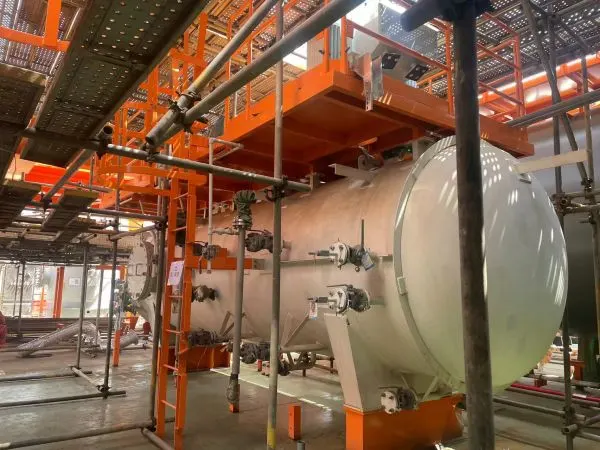
In large-scale mineral processing lines, high-power mineral powder ball machines are not simply auxiliary grinding equipment—they are production-critical assets that directly influence output stability, energy consumption, and final product quality. Whether deployed in mining concentrators, cement plants, or chemical powder processing facilities, these machines are expected to operate under sustained heavy loads, often in high-dust and high-temperature environments.

However, in many real-world operations, performance issues such as abnormal vibration, bearing overheating, or premature gear wear are frequently traced back to one overlooked factor: inadequate or improper lubrication management. Compared to mechanical design improvements or costly component upgrades, optimizing lubrication practices is one of the most cost-effective ways to extend equipment lifespan and reduce unplanned downtime.

Lubrication Tips for High-Power Mineral Powder Ball Machines

ball press machine

This guide focuses on practical, field-tested lubrication strategies that go beyond theory, helping operators and maintenance teams improve both reliability and long-term operating efficiency.

Why Lubrication Determines More Than Just “Smooth Operation”

In high-power ball machines, lubrication is not merely about reducing friction—it directly affects mechanical stability, thermal control, and wear patterns across the entire drive system.

When lubrication is properly managed, a stable oil or grease film forms between metal surfaces. This film prevents direct contact, significantly reducing adhesive wear and surface fatigue. More importantly, it acts as a thermal transfer medium, carrying away heat generated from friction and load stress. Without this function, localized overheating can quickly lead to bearing deformation or lubricant breakdown.

Another often underestimated role of lubrication is contamination control. In mineral powder environments, fine particles can infiltrate even well-sealed systems. A properly selected lubricant helps encapsulate and isolate these particles, reducing the risk of abrasive wear that can severely damage precision components.

From an operational standpoint, consistent lubrication translates into:

Lower energy consumption due to reduced friction resistance

More stable rotational speed and grinding efficiency

Reduced frequency of emergency shutdowns

Extended overhaul cycles for key components

How to Select the Right Lubricant for Harsh Operating Conditions

Selecting a lubricant for high-power mineral powder ball machines should never be based on generic recommendations. Instead, it must reflect actual operating conditions.

For more detailed information on practical lubrication strategies for high-power mineral powder ball mills, please click to visit: https://www.zymining.com/en/a/news/lubrication-tips-for-high-power-mineral-powder-ball-machines.html

In modern industrial processes, the production of briquettes plays a critical role in ensuring material handling efficiency, energy utilization, and cost-effectiveness. Among the various factors influencing briquette performance, the shape and size of the balls used in briquetting machines are of paramount importance. Industrial operators increasingly recognize that customized ball shapes and sizes are not merely aesthetic choices—they are pivotal for optimizing the entire production workflow and improving the quality of the final product.

Why Customized Ball Shapes Matter

briquetting-machines

Briquetting machines, whether used in metallurgy, cement production, or biomass fuel processing, rely on precise compaction and uniformity to achieve maximum efficiency. Standardized, off-the-shelf balls often fail to meet the unique needs of different production lines. By tailoring the ball shape—be it spherical, cylindrical, oval, or even multi-faceted—manufacturers can:

Enhance Compression Consistency: Customized shapes ensure even pressure distribution during the briquetting process. This leads to briquettes with uniform density, which improves combustion efficiency and material strength.

Reduce Material Wastage: Misaligned or poorly shaped balls can cause uneven compaction, resulting in excess material loss during processing. Optimized shapes minimize these inefficiencies.

Improve Machine Longevity: Machines experience less wear when balls match the design specifications of the press or roller system. Properly shaped balls reduce friction and mechanical stress, lowering maintenance costs and downtime.

The Role of Ball Size in Industrial Efficiency

Alongside shape, the size of the balls used in briquetting operations significantly affects both the quality and consistency of industrial briquettes. Smaller balls may provide finer compression and more uniform density but can increase processing time if the production volume is high. Conversely, larger balls allow for faster throughput but can compromise uniformity if not carefully calibrated.

Custom sizing offers several advantages:

Optimized Production Rates: Adjusting ball size to match material flow and machine speed can boost throughput without sacrificing briquette quality.

Energy Efficiency: Correctly sized balls reduce the force required for compression, lowering energy consumption per ton of briquettes.

For more detailed information on maximizing the efficiency and performance of briquetting machines by customizing sphere shape and size, please click to visit: https://www.zymining.com/en/a/news/customized-ball-shapes-and-sizes-for-briquetting-machines.html

In modern industrial manufacturing, particularly in the feed, fertilizer, and chemical sectors, the performance of a ball press machine plays a pivotal role in determining production efficiency, product quality, and operational costs. Among the many parameters that influence machine performance, the roller gap—the precise distance between the pressing rollers and the forming die—stands out as one of the most critical. Properly adjusting this gap is essential not only for achieving optimal pellet formation but also for prolonging the lifespan of your equipment and reducing unnecessary maintenance expenses.

Why Roller Gap Matters

The roller gap directly controls the compression force applied to raw materials as they pass through the ball press. If the gap is set too wide, raw materials may not undergo sufficient compression. This often results in pellets that are loosely formed, inconsistently sized, and of variable density, which can compromise downstream processes or packaging. On the other hand, an excessively narrow gap can generate extreme pressure on the rollers, increasing the risk of roller wear, material jamming, or even mechanical failure.

Beyond just pellet size, the roller gap affects density uniformity, mechanical strength, and material wastage. A properly calibrated gap ensures that each pellet achieves consistent hardness and durability, reducing breakage during handling or transportation.

ball press machine

Key Factors to Consider Before Adjustment

Before making any adjustments to the roller gap, operators should carefully evaluate several variables:

1. Material Moisture Content

Moisture significantly influences compressibility. High-moisture materials generally require a slightly wider gap, as water facilitates material cohesion. Conversely, low-moisture or dry materials need a narrower gap to achieve adequate compression and proper pellet formation. Ignoring moisture content can lead to inconsistent pellets, affecting both quality and throughput.

2. Material Hardness and Granularity

Softer or fine-grained materials compress easily and tolerate minor variations in roller gap. In contrast, harder, coarse, or fibrous materials require precise gap adjustment to achieve the desired pellet density without overloading the machine.

3. Production Output Goals

Adjusting the roller gap affects both pellet quality and production rate. A wider gap may increase throughput but risks reducing pellet density and strength. A narrower gap enhances pellet uniformity but may slow production. Balancing these factors is crucial depending on operational priorities.

4. Machine Condition

Before adjusting, ensure the ball press machine is in good working condition. Check roller alignment, inspect for surface wear, and verify the die condition. Worn or misaligned components can distort the actual gap, leading to suboptimal results even after adjustment.

ball press machine

Step-by-Step Roller Gap Adjustment Guide

Proper roller gap adjustment requires patience and precision. The following step-by-step approach ensures safe and effective operation:

For more detailed information on how to precisely adjust the roller clearance to achieve maximum efficiency in a ball press, please click here: https://www.zymining.com/en/a/news/how-to-adjust-roller-gap-for-ball-press-machine-efficiency.html

In modern manufacturing environments where precision, efficiency, and reliability define competitiveness, industrial welding positioners play an indispensable role. Whether used in welding automation, heavy assembly lines, or rotating work platforms, these systems are responsible for accurately positioning large and often complex workpieces. However, the long-term performance of an industrial positioner depends heavily on the condition of its core transmission components—gears and bearings.

Although wear-resistant gears and bearings are engineered to withstand extreme loads and harsh conditions, no component is immune to gradual degradation. Without timely inspection and replacement, minor wear can escalate into major mechanical failure, leading to costly downtime, safety risks, and reduced production efficiency. This article provides a comprehensive, practical guide to understanding, diagnosing, and replacing these critical components while offering actionable maintenance strategies to extend service life.

Why Gears and Bearings Are Critical to Positioner Performance

Every industrial positioner relies on a precisely coordinated mechanical system, in which gears and bearings serve as the backbone of motion control.

Gears are responsible for transmitting torque and controlling rotational speed. Their accuracy directly determines whether the positioner can maintain consistent angular positioning. High-quality gear systems are typically manufactured from hardened alloy steels or undergo surface treatments such as carburizing or nitriding to enhance wear resistance and fatigue strength.

Bearings, on the other hand, support rotational motion while minimizing friction between moving parts. They ensure smooth operation under both radial and axial loads. In high-performance positioners, bearings may incorporate advanced materials such as ceramic rolling elements or hybrid designs to improve durability under extreme temperatures and high-speed conditions.

When these components begin to wear, the impact is not isolated. Instead, it affects the entire system by introducing vibration, reducing alignment accuracy, and increasing energy consumption. Therefore, maintaining the integrity of gears and bearings is essential for ensuring both operational efficiency and workplace safety.

industrial welding positioners

What Causes Wear in Industrial Gears and Bearings

Understanding the root causes of wear helps operators implement better preventive strategies. In real industrial applications, component degradation is rarely due to a single factor. Instead, it is typically the result of combined stresses over time.

Heavy and fluctuating loads place repeated stress on gear teeth and bearing surfaces, leading to fatigue and micro-cracks. In addition, harsh environmental conditions such as dust, metal particles, moisture, and chemical exposure accelerate surface damage and corrosion. Poor lubrication practices further exacerbate the problem by increasing friction and heat generation, which speeds up material degradation.

Another often overlooked factor is misalignment. Even slight deviations in shaft alignment can cause uneven load distribution, resulting in localized wear on gears and bearings. Over time, this imbalance significantly reduces the service life of the entire positioner system.

Key Warning Signs That Indicate Replacement Is Necessary

Proactive maintenance begins with early detection. Operators who understand the warning signs of component wear can prevent unexpected breakdowns and extend equipment lifespan.

One of the most common indicators is abnormal noise. Grinding, clicking, or knocking sounds often suggest that gear teeth are damaged or that bearings have developed internal defects. These sounds usually become more pronounced under load and should never be ignored.

For more detailed information on replacing welding positioner gears and bearings, please click to visit: https://www.bota-weld.com/en/a/news/replacing-wear-resistant-gears-and-bearings-in-welding-positioners.html

In heavy-duty fabrication workshops, particularly those involved in structural steel manufacturing, pressure vessel production, and large-scale welding assemblies, head and tailstock welding positioners are not just auxiliary equipment—they are central to operational efficiency. These systems enable controlled rotation and precise positioning of oversized workpieces, allowing operators to maintain optimal welding angles and machining accuracy. However, while they significantly improve productivity, they also introduce a layer of risk that cannot be overlooked.

Safety Precautions for Operating Large Head-and-Tail Frame Positioners

For many manufacturers, safety challenges do not arise from lack of awareness, but from inconsistent execution of safety procedures in high-pressure production environments. Therefore, implementing a structured, experience-driven safety framework is no longer optional—it is a necessity for sustainable operations.

welding positioners

Understanding the Real Risks Behind Large-Scale Positioners

Unlike smaller positioning devices, large-scale head and tailstock systems operate under extreme loads and torque conditions. A single misstep can result in serious consequences. The most common hazards observed in real industrial environments include:

Uncontrolled rotational inertia when handling asymmetrical or improperly balanced workpieces

Mechanical slippage caused by insufficient clamping force or worn fixtures

Pinch and crush points between rotating components and fixed structures

Electrical system failures, especially in older or poorly maintained equipment

Hydraulic or servo malfunction, leading to sudden and unexpected movement

From a practical standpoint, these risks are often compounded by human factors such as fatigue, inadequate communication, or over-reliance on automation systems.

Pre-Operation Safety: Where Most Accidents Can Be Prevented

Operator Competency Beyond Basic Training

It is not enough for operators to simply “know how to use” the equipment. In high-load applications, operators must understand:

Load distribution principles

Equipment torque limits

Emergency response timing

System feedback signals (noise, vibration, resistance changes)

Experienced operators often identify potential failures before they occur—not through alarms, but through subtle changes in machine behavior. This level of awareness should be cultivated through continuous training, not one-time certification.

For more detailed information on advanced risk control strategies for large spindles and tailstock positioners, please click to visit: https://www.bota-weld.com/en/a/news/safety-precautions-for-operating-large-head-and-tail-frame-positioners.html

In modern manufacturing, precision and efficiency are crucial, and welding plays a pivotal role in achieving both. Two of the most commonly used welding techniques, TIG (Tungsten Inert Gas) and MIG (Metal Inert Gas) welding, offer unique advantages depending on the materials, thicknesses, and project requirements. However, one factor often overlooked by both beginners and experienced welders is the impact of rotation speed on weld quality. Selecting the appropriate rotation speed can significantly influence the integrity, appearance, and strength of the weld, making it an essential consideration for any fabrication process.

Before diving into rotation speeds, it is essential to understand the fundamental differences between TIG and MIG welding.

Differences Between TIG and MIG Welding

TIG Welding: TIG welding involves using a non-consumable tungsten electrode to produce the weld. Filler material is added separately if needed, and an inert gas, usually argon, protects the weld pool from contamination. TIG welding is known for its precision, high-quality welds, and versatility across materials like stainless steel, aluminum, and copper alloys. However, it requires a higher skill level and slower operation compared to MIG welding.

MIG Welding: MIG welding, by contrast, uses a consumable wire electrode that melts continuously and forms the weld. An inert or semi-inert shielding gas is employed to protect the molten metal. MIG welding is faster and more suitable for high-production environments. Its ease of use makes it popular for thicker materials and long, continuous welds, although achieving the same aesthetic precision as TIG can be challenging without proper technique.

Understanding these differences is key because the optimal rotation speed in each process depends on the interaction between the electrode, filler material, and the weld pool.

Welding Positioner

The Role of Rotation Speed in Welding

Rotation speed refers to the circular or oscillatory motion of the electrode or torch across the weld joint. While it may seem like a minor detail, it profoundly affects:

Heat Distribution: Proper rotation helps distribute heat evenly along the weld joint, reducing the risk of burn-through, warping, or undercutting.

Penetration Depth: Rotation speed affects how deeply the weld penetrates the base material, impacting structural integrity.

Bead Appearance: Consistent motion ensures uniform bead width and smooth, aesthetically pleasing welds.

Porosity and Defects: Incorrect rotation can trap gases or create inconsistent shielding, resulting in porosity and weak welds.

For more detailed information on how to select the appropriate rotation speed for TIG and MIG welding, please click to visit: https://www.bota-weld.com/en/a/news/impact-of-rotation-speed-on-weld-quality.html

In today’s advanced manufacturing environment, welding positioners have evolved from simple support devices to indispensable tools that enhance both productivity and precision. These devices allow operators to rotate, tilt, or manipulate heavy workpieces safely, enabling access to complex angles without compromising welding quality or operator ergonomics. Despite their apparent simplicity, using welding positioners effectively requires a thorough understanding of load capacity and the center of gravity (CG) of the workpiece. Neglecting these critical calculations can result in equipment failure, misaligned welds, or even serious workplace accidents.

This guide is designed for engineers, welding professionals, and manufacturing managers to provide practical insights on determining load capacity and accurately locating the center of gravity for welding positioners, helping ensure safety, efficiency, and precision in all welding operations.

Load Capacity and Center of Gravity Calculation of Welding Positioner

The load capacity of a welding positioner refers to the maximum weight it can safely support and manipulate. Unlike a static weight limit, this rating incorporates several engineering factors, including the device’s structural integrity, motor power, gear ratios, and integrated safety margins. Exceeding this capacity can place undue stress on the mechanical components, leading to accelerated wear, reduced lifespan, or sudden failure.

Key Factors Affecting Load Capacity

Workpiece Weight

The foremost factor is the total weight of the object being welded. This includes not only the raw material but also any fixtures, clamps, or temporary holding devices. Overlooking these can inadvertently exceed the rated capacity.

Rotational Moment (Torque)

Load capacity is not just about weight; it also considers the torque generated when a workpiece is rotated or tilted. A heavier workpiece positioned farther from the axis of rotation increases the torque exponentially, putting additional strain on the motors and bearings.

Positioner Geometry

The size and shape of the table or fixture significantly affect how the load is distributed. Larger radii or extended platforms increase bending forces, necessitating careful attention to weight placement.

Safety Factor

Manufacturers typically design positioners with a safety factor ranging from 1.5 to 2.0 times the expected working load. This margin accounts for dynamic forces, vibration, wear over time, and unexpected shifts in the workpiece.

Welding Positioner

Calculating Effective Load Capacity

A simple yet effective method to understand load capacity involves considering both weight and distance from the rotational axis:

Effective Load=Maximum Rated Torque/Distance from Axis to Workpiece CG

For more detailed information on how to calculate the load capacity and center of gravity of a welding positioner, please click to visit: https://www.bota-weld.com/en/a/news/load-capacity-and-center-of-gravity-calculation-of-welding-positioner.html

In modern heavy transportation and industrial logistics, the reliability of key mechanical components directly determines operational safety and efficiency. Among these components, slewing rings used in heavy-duty trailers play a decisive role in enabling controlled rotation under high loads. Whether in modular transport, construction equipment hauling, or specialized industrial trailers, accurate load capacity calculation is not just a design step—it is the foundation of long-term performance and risk control.

Many equipment failures in real-world applications can be traced back to improper bearing selection or inaccurate load estimation. For manufacturers, engineers, and procurement teams, understanding how to optimize slewing ring load calculations can significantly reduce downtime, extend service life, and improve overall return on investment.

What Is a Slewing Ring and Why It Matters in Heavy-Duty Trailers

A slewing ring, often referred to as a turntable bearing, is a large-diameter rotational bearing designed to support combined loads, including axial forces, radial forces, and tilting moments. Unlike conventional bearings, slewing rings are engineered to handle multi-directional loads simultaneously while maintaining smooth rotational performance.

In heavy-duty trailer systems, slewing rings are commonly installed between the chassis and the load platform, enabling controlled articulation and steering. This is especially critical in:

Low-bed trailers transporting oversized equipment

Modular trailers used in wind turbine or bridge transport

Self-propelled transporters in heavy industry

When these systems operate under uneven terrain, sudden braking, or off-center loads, the slewing ring becomes the primary component absorbing and redistributing stress. This makes precise load calculation essential to prevent structural fatigue, deformation, or sudden failure.

Trailer Slewing Rings

Why Load Capacity Calculation Is Critical for Safety and Cost Control

Accurate load capacity calculation directly impacts three key areas:

1. Operational Safety

An undersized slewing ring may fail under peak loads, leading to instability or even catastrophic accidents during transport.

2. Equipment Lifespan

Incorrect load estimation accelerates fatigue damage in rolling elements and raceways, significantly reducing service life.

3. Cost Efficiency

Oversized bearings increase procurement costs, add unnecessary weight, and may negatively affect fuel efficiency and payload capacity.

For more detailed information on the calculation and optimization of the load-bearing capacity of heavy-duty trailer slewing bearings, please click to visit: https://www.mcslewingbearings.com/a/news/load-capacity-calculation-for-heavy-duty-trailer-slewing-rings.html

In large-scale mining operations, equipment reliability is not simply a performance metric—it directly determines production continuity and cost control. Among the many mechanical components used in mining transport systems, turntable bearings in mining trailers play a decisive role in ensuring structural stability and maneuverability. However, unlike standard industrial applications, these bearings operate in an environment where contamination, impact loads, and chemical exposure are constant and unavoidable.

Sealing Solutions for Mining Trailer Turntable Bearings

Trailer Turntable Bearings

Under such conditions, traditional sealing methods often fall short. As a result, environmental sealing solutions are no longer treated as auxiliary components but as a core engineering consideration that directly affects bearing lifespan, maintenance cycles, and overall fleet efficiency.

Why Turntable Bearings Are a Critical Failure Point in Mining Trailers

Turntable bearings function as the rotational interface between the trailer chassis and the load-bearing platform. This rotational capability allows mining trailers to navigate uneven terrain, tight loading zones, and confined operational paths.

However, this same structural position exposes the bearing system to multiple stress factors simultaneously:

Continuous high-load rotation

Shock loads from uneven ground

Direct exposure to contaminants from below and above

Limited protection due to structural openness

When a sealing system fails, contamination enters the bearing raceway, leading to lubrication breakdown, increased friction, and ultimately premature failure. In real-world mining scenarios, this often results in unplanned downtime, costly part replacement, and operational delays that cascade across the production chain.

Real Environmental Threats: What Actually Damages Bearings

From an engineering perspective, the degradation of turntable bearings is rarely caused by a single factor. Instead, it is the combined effect of multiple environmental aggressors:

1. Fine Abrasive Particles

Mining sites generate ultra-fine dust that can easily bypass inadequate seals. Once inside the bearing, these particles act as grinding media, accelerating wear on raceways and rolling elements. Over time, this leads to surface pitting and loss of precision.

For more detailed information on sealing solutions for mining trailer turntable bearings, please click to visit: https://www.mcslewingbearings.com/a/news/sealing-solutions-for-mining-trailer-turntable-bearings.html

In the trailer manufacturing and maintenance industry, the turntable bearing plays a pivotal role in ensuring smooth operation, durability, and safety. Whether you are managing a heavy-duty flatbed trailer, a mobile crane platform, or a specialized utility trailer, the choice between single-row and double-row ball turntable bearings can significantly affect performance, maintenance requirements, and overall lifespan. Understanding the functional differences, advantages, and limitations of each type is crucial for making an informed decision.

Single-Row vs Double-Row Ball Trailer Turntable Bearing

拖车转盘轴承

Understanding Turntable Bearings

Turntable bearings, also known as slewing bearings in industrial contexts, are mechanical components designed to facilitate rotation between two structural parts. In trailers, these bearings are installed at the pivot point where the trailer body rotates relative to the chassis or towing mechanism. By distributing radial, axial, and moment loads efficiently, turntable bearings reduce friction and wear, ensuring the trailer can maneuver safely under heavy loads.

Ball-type turntable bearings, in particular, are widely used in trailers due to their excellent rotational smoothness and load-handling characteristics. Unlike roller bearings, ball bearings allow for precise movement with minimal friction, which is essential for applications where frequent steering adjustments or rotation is required.

Single-Row Ball Turntable Bearings

Single-row ball turntable bearings are designed with a single line of balls between the inner and outer rings. This configuration provides several advantages:

Compact Design: Single-row bearings are generally smaller and lighter, making them ideal for trailers where space constraints and weight reduction are priorities.

Cost-Effective: Due to simpler construction and fewer components, single-row bearings are usually more economical to produce and replace.

Sufficient for Moderate Loads: For trailers carrying standard loads, single-row bearings can handle both axial and radial forces effectively, providing reliable performance in everyday applications.

However, single-row bearings have limitations. Their load capacity is lower than double-row bearings, particularly for applications involving high moment loads or uneven weight distribution. Over time, excessive loading can lead to accelerated wear and potential misalignment, which may affect steering precision and safety.

Double-Row Ball Turntable Bearings

Double-row ball bearings feature two lines of balls, effectively increasing their load-carrying capacity without significantly enlarging the bearing diameter. This design brings several advantages:

Higher Load Capacity: The dual-row configuration allows double-row bearings to support heavier trailers or those carrying unevenly distributed loads.

Better Moment Resistance: Double-row bearings are more capable of resisting tilting moments, which is particularly important for specialized trailers such as those used in construction, military, or industrial transport.

Extended Lifespan: With a larger contact surface and more evenly distributed load, double-row bearings experience less stress per ball, reducing wear and maintenance frequency.

On the downside, double-row bearings are typically heavier and more expensive than single-row counterparts. They may also require slightly more complex installation and alignment procedures, especially in compact trailer designs.

Key Considerations When Choosing Between Single-Row and Double-Row Bearings

Selecting the right bearing depends on multiple factors, including the trailer’s intended use, load characteristics, and operating environment:

Load Requirements: If your trailer regularly carries heavy or uneven loads, a double-row bearing will provide greater durability and stability. For lighter, standard-duty trailers, single-row bearings are often sufficient.

For more detailed information about single-row ball bearings vs. double-row ball bearings, please click to visit: https://www.mcslewingbearings.com/a/news/single-row-vs-double-row-ball-trailer-turntable-bearing.html