
Crossed roller bearings are precision components engineered to handle simultaneous radial, axial, and moment loads in a compact envelope. When one fails prematurely, the consequences ripple through the entire machine—unplanned downtime, damaged adjacent components, and lost production. Understanding why these failures occur is the first step toward eliminating them. This article examines the most common crossed roller bearing failure causes, how to recognize each one, and what practical measures prevent recurrence.
Why Crossed Roller Bearings Fail: A Root-Cause Framework
Before examining individual failure modes, it helps to understand that the vast majority of bearing failures are not manufacturing defects. Industry studies consistently show that fewer than 1% of bearing failures stem from material or production flaws. The remaining failures trace back to application, installation, lubrication, or operating conditions. For crossed roller bearings—which operate with tight internal clearances and precise roller-to-raceway contact—even minor deviations from ideal conditions can accelerate wear dramatically.
PRS has supported customers across robotics, medical equipment, semiconductor manufacturing, and heavy machinery. In that experience, the same failure patterns appear repeatedly across industries, regardless of the specific application. Recognizing these patterns is what separates reactive maintenance from reliable operation.
The Six Most Common Failure Causes
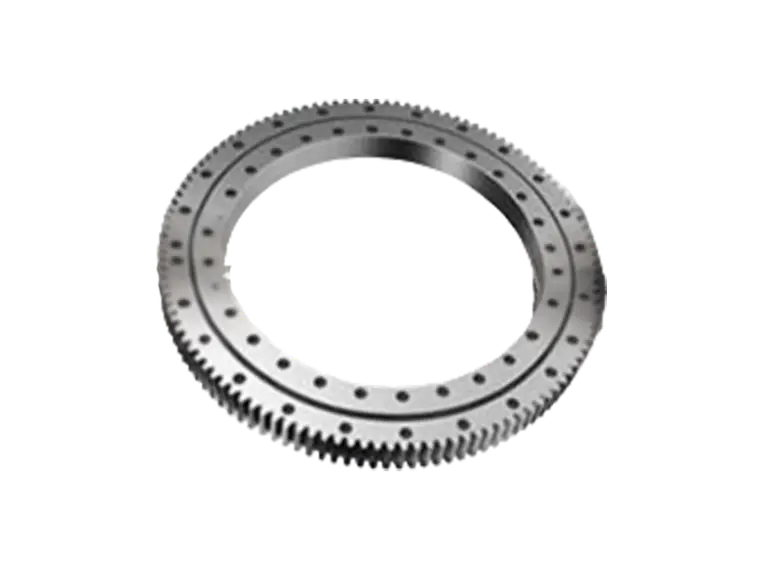
1. Inadequate or Degraded Lubrication
Lubrication failures account for a significant share of premature bearing failures. In crossed roller bearings, the lubricant serves three critical functions: separating rolling elements from raceways, protecting against corrosion, and dissipating heat. When any of these functions breaks down, metal-to-metal contact follows.
Common lubrication problems include:
- Using the wrong lubricant viscosity for the operating temperature and speed
- Insufficient lubricant quantity during initial assembly
- Lubricant degradation from heat, oxidation, or contamination
- Failure to re-lubricate at proper intervals
- Incompatibility between lubricants when switching brands or types
In crossed roller bearings, lubrication starvation is particularly damaging because the line contact between cylindrical rollers and raceways creates high stress concentrations. A lubricant film that would be adequate for a ball bearing may be insufficient here.
…
For more detailed information on common failure causes for crossed roller bearings, please click here: https://www.prsbearings.com/news/crossed-failure/
