Molds are various molds and tools used in industrial production for injection molding, blow molding, extrusion, die casting or forging, smelting, stamping, etc. to obtain the desired products. In short, a mold is a tool for making a shaped article, and the tool is composed of various parts, and different molds are composed of different parts. Next, let’s take a look at the mold design and production process!

First, manufacturing preparation

Prepare the molds to be made, whether it is materials or technicians, you need to be well prepared.

Second, feasibility analysis

Feasibility analysis of the products of the designed molds, taking the automobile parts as an example, firstly, the assembly drawings of each component are analyzed by the design software, that is, the set of drawings mentioned in our work, to ensure that the drawings of the products are correct before the mold design. On the other hand, you can familiarize yourself with the importance of each component in the entire car to determine the key size, which is very beneficial in the mold design. The specific set of drawings still needs to be designed by yourself.

Third, the structure

After the product analysis, the product to be analyzed, what kind of mold structure is used for the product, and the product is sorted, the content of each process is determined, and the product is developed by using the design software. To expand forward, for example, a product requires five processes, and the stamping is completed from the product drawing to the fourth, third, second, and first projects, and a graphic is copied and then the previous project is executed. The work of starting the work of the five projects is completed, and then the detailed work is carried out. Note that this step is very important and needs to be very careful. If this step is completed well, it will save a lot of time in drawing the mold diagram. After the stamping content of each project is determined, including in the forming mold, the inner and outer lines of the thickness of the product material are retained to determine the size of the convex and concave molds. The method for product unfolding is not described here, and will be in the product unfolding method. Specific introduction.

Fourth, preparation materials

According to the product development drawing, the template size is determined in the drawings, including the fixed plate, the unloading plate, the convex and concave mold, the insert, etc., pay attention to directly preparing the material in the product development drawing, which is of great benefit to the drawing mold drawing. I have seen that many mold designers directly calculate the product development drawings by hand. This method is too inefficient, draw the template size directly on the drawing, and express it in the form of a group diagram. The preparation of the material is completed, and on the other hand, a lot of work is saved in the work of the various parts of the mold, because in the work of drawing each component, it is only necessary to add the positioning, the pin, the guide post and the screw hole in the preparation drawing.

Fifth, draw drawings

After the preparation is completed, the mold drawing can be fully entered, and a copy can be made in the preparation drawing to draw the components, such as adding screw holes, guide post holes, positioning holes, etc., and in the punching die. The hole for each hole needs to be cut by the wire. In the forming die, the forming gap of the upper and lower molds must not be forgotten, so the mold drawing of one product after the completion of these work is almost completed 80%, and the process of drawing the mold drawing is also completed. Need to pay attention to: each process, refers to the production, such as the fitter scribing, wire cutting, etc. to the different processing steps have a complete production of the layer, which has great benefits for wire cutting and drawing management, such as color distinction, etc., size The labeling is also a very important job, but also a troublesome job, because it is too time consuming.

Sixth, proofreading

After the above drawings are completed, the drawings cannot be issued. It is also necessary to proofread the mold drawings, assemble all the accessories, make different layers for each different mold plate, and use the same reference as the guide post holes to perform the mold. Analyze the analysis and insert the product development drawings into the group diagrams to ensure that the hole positions of the template are consistent and the gap between the upper and lower molds of the bending position is correct.

Seven, production

During the production process, pay attention to check the glue position and check whether the glue position is uniform. If it is uneven, it will cause shrinkage and affect the appearance.

Eight, open the mold direction

Determine the parting surface and the draft angle

1. The parting surface selects the value projected in the mold opening direction and is as simple as possible.

2. Touching the position: Try to touch the back mold as much as possible. If you want to touch the front mold, it is easy to walk the front, affect the appearance, and use the plane contact.

3. Pillow: Pillow 5-8 mm, and then flat with the large part, the plastic part is pulled 3 degrees, the back is pulled 3 degrees or avoiding the air.

4. Insert the position: use the side work, pull 3 degrees, generally do inserts.

The above is the entire content of the mold design and manufacturing process. In general, the mold design and production process is mainly preparation preparation, production feasibility analysis and production design structure, preparation of production materials, drawing production drawings, and then in detail Proofreading, to ensure that the production is started after the error is correct, it is also necessary to pay attention to the direction of demoulding when demolding.
With the rise of lost foam casting, how to reduce the cost of castings, increase the yield and improve the quality is a problem. To solve such problems, the key is in the choice of sand type. Usually, in order to reduce the cost of sand, people will choose cheap quartz sand. However, due to the disadvantages of low refractoriness, poor gas permeability and poor fluidity, such sand has many casting defects during the casting process, such as: sand, pores. These defects are obvious in alloy steel casting. In addition, this kind of sand will generate a lot of dust in the subsequent treatment, which makes the environment of the production workshop very bad, the amount of waste sand increases, the sand is reduced, the sand recycling rate is low, and it is not durable. Therefore, from a comprehensive perspective, the cost of sand increases.

Nowadays, a new type of sand for lost foam casting has been widely concerned by the foundry industry and is known as the new sand “ceramic foundry sand” for green products. The major factors affecting the quality of castings and the excellent properties of ceramic foundry sand are summarized below.

1. Liquidity

Since the ceramic foundry sand is a spherical particle, its fluidity is very good, it is easy to compact when it is molded, and it can maintain good gas permeability, while quartz sand and forsterite sand are both polygonal sand, and the fluidity is poor. Originally, forsterite sand was used as the filling sand. Due to the poor fluidity of the polygonal sand, defects such as rat tail and scarring occurred many times. This phenomenon has been significantly improved after the use of ceramic foundry sand, improving the yield by 5%. Practice has proved that the fluidity of ceramic foundry sand is better than the existing various types of sand.

2. Refractoriness

The ceramic foundry sand is made of high-quality aluminum bauxite from Shanxi and is made by melting in a high-temperature electric furnace. Ceramic foundry sand is a spherical particle, the main component is aluminum oxide (Al2O3), its refractoriness can reach 1900 °C. The main component of quartz sand is silica (SiO2), which has a refractoriness of less than 1700 ° C. Quartz sand will have various crystals at different temperatures, which will reduce the refractoriness of the sand again during the casting process.

Practice has proved that the use of ceramic casting sand can significantly reduce mechanical and chemical sand, greatly reduce the labor intensity of sand cleaning, and is not easy to produce sand, sand, porosity and other defects. For example, the high-manganese steel castings produced by Jilin Innovation Lost Foam Equipment Co., Ltd., before the use of ceramic foundry sand, the sand-sanding and sand-sanding phenomenon is very serious, and each time it takes a lot of manpower and material resources to clean and polish the surface of the casting. It not only increases the production cost of the casting, but also causes the surface quality of the casting to be unattractive. This type of casting defect has been eliminated after the use of ceramic foundry sand. To this end, the cost savings are 6%. The ceramic refining sand is comparable to chromite ore and is now widely used in the casting of raw chromite ore.

3. Breathability

The permeability of the sand depends mainly on the size of the sand, the particle size distribution, the type of the grain and the type of binder. In the pouring process, if the permeability of the molding sand is poor, a large amount of gas generated by the internal heat due to high temperature cannot be immediately discharged, so that a bonfire phenomenon occurs, and defects such as pores, cold separation, and insufficient pouring are generated in the casting, and even scrapped.

Both quartz sand and magnesium olive sand are polygonal sands, which have poor gas permeability, while ceramic foundry sands are spherical particles with uniform particle size distribution and good gas permeability, which can avoid such casting defects. In the production of high-manganese wear-resistant steel castings, quartz sand and forsterite sand have been used successively, but the fruit is not ideal. Due to the poor gas permeability of the two sands, the molten bubble gas is not discharged, and a large number of knots are formed on the surface of the casting. Oh, and a large amount of gas generated by high-temperature heating during pouring cannot be discharged, resulting in defects such as porosity, crusting, and insufficient pouring, or the use of ceramic casting sand to solve this problem, and the yield is improved by 7%.

4. Thermal expansion coefficient

During the high-temperature casting process of castings, the thermal expansion of the molding sand will cause a slight change in the size of the molding sand, which in turn affects the accuracy of the casting size. The thermal expansion coefficient of the molding sand is too large, which may cause casting defects such as sand inclusion, crusting, and rat tail. The ceramic casting sand has a small coefficient of thermal expansion, and there is almost no expansion phenomenon during the casting process, which greatly improves the precision of the casting, and its performance is comparable to that of zircon sand. Henan Xinxiang has many manufacturers producing vibration equipment. There are many small holes in the wall panel. Due to its precision and refractoriness, zircon sand is used as casting sand. Ceramic casting sand is now used, and the cost of molding sand is reduced by 70%.

5. Reuse performance

Because quartz sand is polygonal sand, the strength is low, and the sand is easily broken during the modeling and sand treatment process. Not only will it generate a lot of dust, pollute the production environment, but also generate a lot of waste sand, which will make the sand not durable. According to statistics, The amount of waste sand cleared per pouring is about 5%. The ceramic foundry sand is spherical sand, which has high strength and is not easy to be broken. It can greatly reduce the amount of dust in the production workshop, reduce the labor intensity and production cost of the sand treatment workers, reduce the amount of waste sand, and increase the quantity of recycled sand. Thereby greatly reducing the amount of sand loss. According to statistics, the annual loss of ceramic foundry sand is below 5%. Therefore, the high cost caused by the high price of the ceramic foundry sand is directly offset, and the production cost is greatly reduced. According to the calculation of the manufacturer using the sand, the cost of the secondary increase can be recovered within 8-10 months.


Through the application of the lost foam and solid casting, the paper sprue tube does not produce an endothermic reaction or a gasification and cooling of the foaming runner at the beginning of the molten metal casting like the ceramic tube.

Because of its good thermal insulation performance, the paper sprue tube reduces the heat transfer of the molten metal to the pipe wall, so that keeping the molten metal without cooling is equivalent to increasing the temperature at which the molten metal enters the mold, and the temperature of the molten metal is relatively stable, prompting the molten metal. Filling is fast and smooth. The molten metal has sufficient time to replenish, which is beneficial to equalization and solidification.

The advantages of a paper sprue tube are as follows:

(1) Light weight, good toughness, easy to cut, easy to install, easy to connect with foam plastic runner.

(2) Good high temperature strength, high refractoriness and strong anti-scour ability. The paper sprue tube adopts socket connection, and the filter mesh is used together to filter the slag and impurities after pouring the molten metal into the runner, effectively preventing and Eliminate the occurrence of slag inclusion defects.

(3) Does not have any effect with the molten metal, maintains the original performance of the molten metal, and has no carburization problem for the casting. Use paper sprue tube, sprue cup and sprue superheat zone, sprue and sprue joint, no foam or paint layer, will not cause sand washing, sand inclusion and sand into the casting White spot (dot) defects. The paper sprue tube has high refractoriness, reducing and avoiding the formation of carbon deposits and wrinkle defects.

(4) Compared with the foam-coated sprue, the paper uses a hollow hollow sprue tube, and the initial casting does not burn the foam material, which reduces the incidence of the reverse reaction caused by the pyrolysis and gasification reaction of the foam material during pouring. Effectively reduce the heat loss of the runner metal liquid, and prevent the occurrence of problems such as sudden and small, broken flow during the casting process due to back spray.

(5) After pouring with a paper runner, there is little hard solid waste, which is easy to peel off after high temperature.

Paper sprue tube effect

According to the situation of a foundry enterprise, replacing the ceramic tube runner with a paper sprue tube, the same pattern can reduce the cutting and binding time, which can save 2/3 time; because the paper sprue tube itself is very light, The labor intensity of the operator is greatly reduced. The sprue splicing assembly task that originally required 2 to 3 people can be completed. Now it can be completed by one person under normal conditions, and the effect and efficiency are better than the original ceramic sprue tube. Paper sprue tubes are easy to cut, unlike ceramic sprue tubes, which require a special cutting machine. Originally used ceramic sprue tube cutting, noise, dust, and labor.

The paper sprue tube of the same specification is about 1/10 of the quality of the ceramic sprue tube. The texture is light and lightweight, and the handling and use are labor-saving. The former male worker can now be qualified and the labor intensity is greatly reduced. After using the paper sprue tube, the hand saw can be cut freely according to the length of use, and the dust is small, and there is almost no noise. The production workshop environment has been greatly improved.
It can be seen from the production site that after the use, due to the socket connection and the tight interface, the risk of the molding sand entering the mold during the molding is eliminated, so that the sand inclusion defect is reduced, the scrap rate of the foundry is significantly reduced, and the economic benefit is obviously improved.

Conclusion

The raw material of the paper sprue tube is made of waste paper and special materials. It is non-burning, light weight and degradable. It realizes the reuse of resources and reduces environmental pollution. It is supported by the national environmental protection policy. The paper sprue pipe has various specifications such as straight pipe, elbow pipe, equal-diameter tee, variable-diameter tee, and variable-diameter straight-through. The lower end of the pouring cup can be customized with a tight seamless interface, and adopts a stop form; generally, the common sprue tubes are mainly round.

At present, the price of paper sprue tubes is relatively high, causing users to hesitate and influencing the use of casting enterprises. Therefore, improving quality and reducing costs are new issues faced by paper sprue pipe manufacturing enterprises. It is believed that with the continuous advancement of technologies such as industrialization and automation, the widespread use of paper sprue pipes in the foundry industry will become a reality.

Paper sprue tubes have many advantages over paper sprue tubes compared to (solid) sprues, sprues, and ceramic sprue tubes that have been widely used in plastic foam sheets, resulting in solid casting of resin sand. The casting system of castings such as large machine bed is simplified, the whole process of production is simplified, the casting defects are obviously reduced, and the high-quality castings are cast in a short production cycle, which brings significant economic benefits to the enterprise.

The solid sand casting process has its unique advantages. There is no drafting angle and there is no model parting surface. It can not only save the cost of making wooden models for the production of single or small batches of machine bed, base and other castings. Moreover, it has the advantages of good surface quality, high dimensional accuracy and small processing allowance; it can also save the core making and drying process; it saves the cumbersome process such as the hanging core and the card core of the molding process, and the operation is more convenient; especially It shortens the production cycle and significantly improves the production efficiency, so it is favored by the machine tool casting industry.

1. Characteristics and problems of machine tool castings

Large machine bed, column, base and box castings are usually made of HT200 ~ HT350. They generally have a complicated internal cavity structure, and the wall thickness is usually 12 ~ 30 mm. The traditional sand casting process (such as resin sand molding) requires more cores to form the inner cavity of the casting. There are some disadvantages:

(1) because the batch size of such castings is not too large, different model specifications require different wood molds. More cores require more core shell molds, which increases the cost and manufacturing cycle of the mold, and also increases the difficulty of mold management;

(2) Since the inner cavity is formed by combining a plurality of cores, the difficulty in controlling the dimensional accuracy of the casting is increased;

(3) The gap between the cores will enter the molten iron, forming flash edges and winged wings, and the grinding and cleaning work of the castings will increase the difficulty and difficulty.

In order to overcome the shortcomings of the above-mentioned traditional sand casting production, the resin sand foam solid casting process has been widely used in the production of large machine tool castings, but the foam solid casting also has some unfavorable characteristics, the most typical of which are three:

(1) Casting requires the formation of high-temperature molten iron to dissolve solid materials (such as EPS), which requires a large amount of heat, and therefore requires a higher pouring temperature;

(2) The pyrolysis material will generate a large amount of gas and residue, and the risk of forming pores and slag inclusions on the casting is high;

(3) A large amount of harmful gases containing benzene and toluene and black smoke are emitted during the pouring process, and environmental protection problems need to be solved. If the casting system is also made of a solid material such as EPS, the damage is even greater because the molten iron is first passed through the casting system.

The use of ceramic tube material as a casting system can effectively overcome the above shortcomings, but the ceramic tube casting system also has shortcomings:

(1) Ceramic tubes are hard, brittle, difficult to cut, and also heavy, and a slightly complicated casting system is difficult to assemble;

(2) The ceramic tube is sintered from the material of the sputum, and the pouring process is eroded by the erosion of the high-temperature molten iron, and there is a risk of falling into the cavity to form inclusion defects;

(3) The ceramic tube fragments after casting sand falling into the sand will be mixed into the sand recycling and regeneration system, which increases the difficulty and cost of recycling and recycling of the sand.

The use of paper materials instead of ceramic materials to make casting casting systems has many advantages and is a development trend. Firstly, the paper material is light and thin, easy to cut, and can be assembled into a complicated casting system. Secondly, the paper casting system is carbonized by high-temperature iron combustion, and the residual is small, and the risk of forming inclusion slag is extremely small; The mixing of ceramic runner tube residues into old sand creates problems that are difficult to clean and reclaim.

2. Application of paper sprue tube in solid casting of resin sand

The casting system of solid sand casting is the same as that of traditional sand casting. It consists of a pouring cup (gate basin), a sprue, a sprue, and a gate. The function of the molten iron is also fast. Smoothly attract people. For large and medium-sized machine tool castings, stepped or medium-sized injections are used to make the flow of molten iron as smooth as possible, and the filling is smooth and fast.

The number of sprues for medium and large machine tool castings can be set to two or more, and some large and extra large castings even need to place 4 to 6 sprues. A sprue basin shall be placed on the sprue to store a certain amount of molten iron. When the pouring is not interrupted, the molten iron can flow into the mold under normal pressure, which can effectively prevent back spray and bonfire from the sprue during pouring. .

The sprue uses a paper sprue tube and two or more sprues can use the same larger sprue basin. When using it, it should be noted that the paper sprue tube needs the sand type to provide support force, and the compactness of the molding sand should be suitable, but the sprue tube should not be damaged too much. The casting filling process is a high-temperature metal liquid casting cavity. The pouring pipe is subjected to the gravity flushing of the molten metal, and also has to withstand the tension of the high-temperature molten metal to the sprue pipe wall; the pouring system is in the high-temperature collecting zone, and all the entering the cavity The molten metal has to pass by. In particular, the use of large-tonnage castings requires that the outer wall of the “paper sprue tube” have a constant supporting force to ensure that the entire filling process is not destroyed.

The sprue and sprue tubes of the paper sprue tube can be connected as a whole, and the size and length of the caliber are determined by the casting system process of the casting. The connection method of the paper sprue tube is a socket interface, which is very convenient, and the length of the sprue tube can be cut by hand saw. The paper sprue tube and fittings are simple and flexible to assemble.

3. The link (assembly) method

(1) Socket (embedded). Insert the lower end of the hollow tube into the socket. It is best to apply a small amount of adhesive to the outer wall before insertion so that the connection between the two is better.

(2) Nesting (stop type). The bottom of the gate cup, the hollow tube of the paper sprue has an inner diameter of the outer diameter of the foam plastic white mold (which can be 0.5 mm larger, the foam plastic mold can be shrunk), and one end of the hollow tube is inserted into one end of the circular diameter of the foam plastic white mold ( Can not be painted in the nesting section).

(3) Bonding (section adhesive). When installing the paper sprue tube before the casting, in order to prevent the distortion and finally put it on the glass plate, according to the total amount of molten iron used in the casting + pouring system, including flow direction, flow selection sprue tube diameter, diameter reduction, turning, three The pipe, pipe and pipe used are all connected by sockets to ensure that the paper sprue pipe is firmly connected. In this way, it is possible to effectively prevent the occurrence of sand inclusion defects due to inadvertent operation during molding. If the two sections of the sprue of the paper sprue hollow tube are flat, the cross-section of the outer wall and the inner wall of the two-end tube and the cross section of the sprue must be adhered with adhesive glue, and wrapped with glass cloth or tape paper. can.

(4) Bonding plus refractory mud strips. The pouring cup and the hollow tube are not integrated, and the sprue is leaked out of the top surface of the sand box by 3~5 mm, and the hollow tube is tightly packed with a foam block to prevent debris. Place a circle of refractory mud strips around the box, place the sprue cups on top and join them with refractory mud strips at the joints (such as sealing mud strips), or the bottom surface of the sprue cups and the top surface of the sprue hollow tubes Adhesive with adhesive, the outer ring is brushed with refractory mud.

(5) Other bonding. According to the size and shape of the gate cup and the sprue, the hollow sprue can be modified according to the above method.

The body of the lost foam mold is made of forged aluminum or cast aluminum. It is used in alternating hot and cold water environments. Different maintenance methods are required depending on the mold structure.

First, the maintenance of manual disassembly mold

Before using the mold, check the following items.

1. Whether the filling port is smooth;

2. Whether the locking screw can be locked;

3. Whether the insert block is in place;

4. Whether the air plug hole is blocked;

5. Whether the upper and lower molds can be tight;

6, whether the mold has cracks;

7. Whether the surface of the mold cavity is heavily abrasive;

8. Whether the water pressure gauge and the air pressure gauge are normal;

9. Is the pipeline valve normal;

10. Is the water pH of the water user appropriate;

11. Is the autoclave normal.

Through the above inspection content to determine the maintenance of manual molds to achieve the following four aspects:

1. Try to use the standard gun of the mold factory, use stainless steel round bar, can not block the gun hole due to rusting of other materials or block the air plug hole due to rust, and use stainless steel bolts for locking screws. Replace it as soon as possible to ensure that the mold can be locked at each opening and closing to prevent flashing of the material during molding.

2. The mold is matured by hot steam, and then cooled by cold water. Inevitably, the outer surface of the mold is covered with scale such as calcium carbonate, which affects the hot and cold exchange of the mold, the molding quality, and more serious blockage of the gas plug hole, so that the hot steam can not Arriving at the surface of the mold cavity, and overhauling the mold, replacing the gas plug, which requires the mold to be descaled and maintained around the week. The descaling is to put the mold in a weak acid environment to soften the scale and then knock it off. The material determines that the mold can not stay in a weak acid environment for a long time, and it is easy to corrode the surface of the cavity. Descaling is a big challenge for the maintenance of the lost mold. Our company now finds that the solution can easily remove the scale of the mold without corroding the mold. Cavity surface. The water quality is often checked so that the mold water environment is in a weak alkaline environment, and it is not easy to cause the mold to generate scale.

3. Because the foam also has a certain corrosive effect and wear on the surface of the mold cavity, this requires a special cover mold on the surface of the mold, which is resistant to acid and alkali, high temperature and can ensure the smooth and easy mold release of the mold surface, and can also be used with the mold. The material has a good affinity, and the surface of the mold cavity is not easy to fall off. The mold of our company adopts the special fluorocarbon coating technology, covering 0.02mm thick fluorocarbon film on the surface of the mold to meet the requirements of the mold. Performance requirements.

4. Manual molds need to be disassembled and handled by hand during use. Pay attention to the lightness during use and try to extend their service life. Inspections before use of autoclaves, pipes, etc. can also avoid some hidden dangers of the mold during molding.

Second, the maintenance of ordinary lost molds

Ordinary machine molds are used on the molding machine, and the maintenance method is similar to that of the manual mold. The following are the following aspects:

1. Before the mold is installed, check the upper and lower templates of the molding machine to ensure clean and flat. If it is not used for a long time, first remove it and clean it, and check the pipeline valve to ensure that the joint points are airtight and non-wetting. Ventilation and water flow are smooth and controllable.

2. Before installing the mold, check whether the individual inserts and core blocks of the mold are assembled in place to ensure that the mold will not escape to the mold air chamber during the filling process.

3. Before the mold is installed, the sealing strips of the upper and lower air chambers of the mold and the forming surface of the forming machine and the separating surface of the mold are installed to ensure that the forming effect of the foam pattern is not affected by the air leakage during the molding process.

4. When installing the machine, ensure that the mold is positioned and fixed on the molding machine, and the method of four-sided positioning is adopted to make the force uniform.

5. During the molding operation, the mold is first opened and closed to ensure that the upper and lower molds are semi-stable.

6. For those who have manual core pulling, the mold should be used according to the operation process. It is first to open the mold and then draw the core, or to draw the core and then open the mold. First, understand the sequence and ensure that the mold will not be crushed due to operational errors. Or scrapped, the inserts and live blocks taken out by the core are placed reasonably, and the underlying foam protection inserts and the live blocks are not bumped. For moving parts, it can be lubricated without affecting foam molding.

7. The surface of the mold cavity is coated with fluorocarbon. It is not possible to scratch the surface of the mold with sharp objects, which affects the foam forming fruit.

8. After the mold is used for 2 weeks, the scale treatment is carried out, and the molding machine template is rustproofed.

Third, the maintenance of automatic lost mold

The use of the automatic lost mold mold mainly involves the service life of the cylinder and the use environment. In addition to the above, the maintenance and maintenance of the cylinder is the maintenance of the cylinder.

1. Before the mold is installed, simulate the opening and closing of each cylinder to ensure smooth and smooth movement of the core block and the stripper, and the stroke is appropriate.

2. For the external cylinder, after understanding the sequence of the core-opening mold, it is only necessary to apply oil lubrication frequently to ensure that there is no hair jam between the sliding sleeve and the copper sleeve.

3. For the internal cylinder, because it is used in the environment where the hot steam and the cooling water circulate back and forth, the heat-resistant cylinder is used, and it is replaced regularly according to the difference of the water quality. Under normal circumstances, the batch is changed for 2 months, and the model is guaranteed when replacing. The journey is consistent.

In mold making, we usually hear casting and forging. What is the difference between the two manufacturing processes?

Casting is only used for large forgings. Casting is an as-cast structure with large columnar crystals and loose centers. Therefore, it is necessary to break the columnar crystal into fine crystal grains by large plastic deformation, and loosely compact, in order to obtain excellent metal structure and mechanical properties.

Forging is a processing method in which a forging press is used to apply pressure to a metal blank to cause plastic deformation to obtain a forged piece having a certain mechanical property, a certain shape and a size. Forging and stamping are of the same plastic processing properties, collectively referred to as forging.

First, casting

Casting is a metal liquid forming process, in which a molten liquid alloy is injected into a pre-prepared mold to form a casting after cooling and solidification. The casting can be subdivided into sand casting, pressure casting, investment casting, shell casting according to the process. , lost foam casting, low pressure casting, gravity casting, etc.

The casting mold is a process in which a metal is smelted into a liquid that meets certain requirements and poured into a mold, and after cooling and solidifying and clearing, a casting (part or blank) having a predetermined shape, size and performance is obtained, which is a modern machine. The basic process of manufacturing industry.

The blank produced by casting has low cost, and it can show its economicality for parts with complicated shapes, especially those with complex inner cavity; at the same time, it has wide adaptability and good comprehensive mechanical properties. However, materials required for casting production (such as metal, wood, fuel, modeling materials, etc.) and equipment (such as metallurgical furnaces, sand mixers, molding machines, core making machines, falling sand machines, shot blasting machines, cast iron plates, etc.) It is polluted by dust, harmful gases and noise.

1. There are many kinds of castings, which are habitually divided according to the modeling method:

(1) Ordinary sand casting, including wet sand type, dry sand type and chemical hardening sand type.

(2) Special casting, according to the modeling material, can be divided into special castings with natural mineral sand as the main modeling material (such as investment casting, clay casting, foundry casting, negative pressure casting, solid casting, ceramics). Type casting, etc.) and special castings with metal as the main casting material (such as metal casting, pressure casting, continuous casting, low pressure casting, centrifugal casting, etc.).

2. The casting process usually includes:

(1) Preparation of molds (containers that make liquid metal into solid castings). The molds can be classified into sand type, metal type, ceramic type, mud type, graphite type, etc. according to the materials used; Semi-permanent and permanent. The pros and cons of casting preparation are the main factors affecting the quality of castings;

(2) melting and casting of cast metal, cast metal (casting alloy) mainly including cast iron, cast steel and cast non-ferrous alloy;

(3) Casting treatment and inspection, casting treatment includes removal of foreign objects on the surface of the core and casting, removal of the riser, burrs and burrs, as well as heat treatment, shaping, anti-rust treatment and roughing.

Second, forging

The forging die is a processing method that applies pressure to the metal blank by using a forging machine to plastically deform it to obtain a forging having a certain mechanical property, a certain shape and a size, and is one of the two major components of the forging.

Through forging, it can eliminate the as-cast looseness and weld hole of the metal, and the mechanical properties of the forging are generally superior to those of the same material. For important parts with high load and severe working conditions in machinery, forgings are often used except for the available rolled sheets, profiles or welded parts.

1. Forging is divided according to the forming method

(1) Open forging (free forging)

The impact force or pressure is used to deform the metal between the upper and lower stellite irons (anvil) to obtain the required forgings, mainly hand forging and mechanical forging.

(2) Closed mode forging

The metal blank is subjected to compression deformation in a forging die having a certain shape to obtain a forged piece, which can be classified into die forging, cold heading, rotary forging, extrusion, and the like.

2. According to the deformation temperature

Forging can be further divided into hot forging (processing temperature is higher than the recrystallization temperature of the blank metal), warm forging (below the recrystallization temperature) and cold forging (normal temperature).

The forging materials are mainly carbon steel and alloy steel of various compositions, followed by aluminum, magnesium, titanium, copper and the like and alloys thereof. The original state of the material is bar, ingot, metal powder and liquid metal. The ratio of the cross-sectional area of ​​the metal before deformation to the area of ​​the die after deformation is called the forging ratio. Proper selection of forging ratios has a lot to do with improving product quality and reducing costs.

Forging according to the temperature of the blank during processing can be divided into cold forging and hot forging. Cold forging is generally processed at room temperature, and hot forging is processed at a higher recrystallization temperature than the billet metal. Forging, which is sometimes heated, but the temperature does not exceed the recrystallization temperature, is called warm forging. However, this division is not completely uniform in production.

The recrystallization temperature of steel is about 460 ° C, but 800 ° C is generally used as the dividing line, and higher than 800 ° C is hot forging; between 300 and 800 ° C is called warm forging or semi-hot forging.

Forging can be divided into free forging, die forging, cold heading, radial forging, extrusion, forming and rolling, roll forging, and boring according to the forming method. The deformation of the blank under pressure is basically free from external restrictions, also called open forging; the blank deformation of other forging methods is limited by the mold, called closed mode forging. The forming tool such as forming rolling, roll forging, boring and the like have a relative rotational motion with the blank, and the blank is subjected to point-by-point and asymptotic pressurization and forming, which is also called rotary forging.

The forging materials are mainly carbon steel and alloy steel of various compositions, followed by aluminum, magnesium, copper, titanium and the like and alloys thereof. The raw state of the material is bar, ingot, metal powder and liquid metal.

Generally, small and medium-sized forgings use round or square bars as blanks. The grain structure and mechanical properties of the bar are uniform and good, the shape and size are accurate, and the surface quality is good, which is convenient for mass production. As long as the heating temperature and deformation conditions are properly controlled, high-quality forgings can be forged without requiring large forging deformation.

By applying static pressure to the liquid metal poured in the mold to solidify, crystallize, flow, plastically deform and form under pressure, a die forging of desired shape and performance can be obtained. Liquid metal die forging is a forming method between die casting and die forging, and is particularly suitable for complex thin-walled parts which are difficult to form by general die forging.

Different forging methods have different processes, among which the hot forging process has the longest process, and the general sequence is: forging blanking; forging billet heating; roll forging blank; die forging; trimming; intermediate inspection, inspection forgings Dimensions and surface defects; forging heat treatment to eliminate forging stress and improve metal cutting performance; cleaning, mainly to remove surface oxide scale; correction; inspection, general forgings undergo appearance and hardness inspection, important forgings also undergo chemical composition analysis , mechanical properties, residual stress and other tests and non-destructive testing.

Casting is the process of casting a liquid metal into a casting cavity that conforms to the shape of the part. After cooling and solidifying, a forming method of the metal part blank having a certain shape, size and performance is obtained.

Casting is mainly divided into sand casting, low pressure casting, centrifugal casting, metal casting, vacuum casting, extrusion casting, lost foam casting, continuous casting and other eight types. Let us take a look at the respective processes and characteristics of these castings.

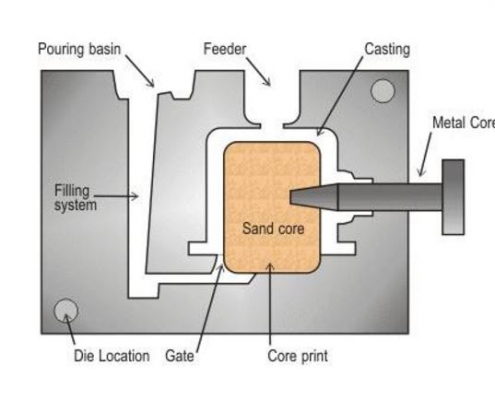
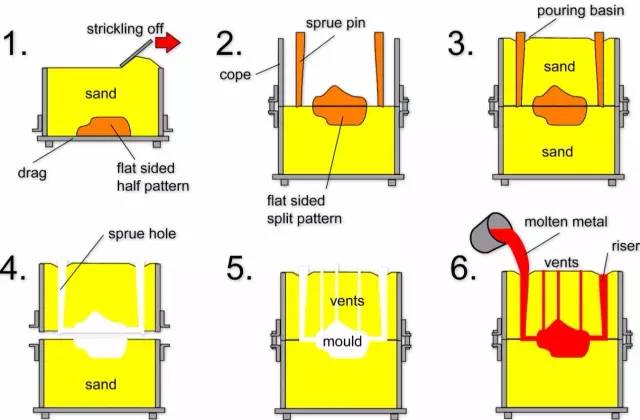
(1) Sand casting

Sand casting is a casting method for producing castings in a sand mold. Steel, iron and most non-ferrous alloy castings can be obtained by sand casting.

Process flow

Sand mold casting process flow chart

Technical features

1. Suitable for making complex shapes, especially blanks with complex internal cavities;

2. Wide adaptability and low cost;

3. For some materials with poor plasticity, such as cast iron, sand casting is the forming process for manufacturing parts or blanks.

Application: Castings for engine cylinder block, cylinder head, crankshaft, etc.

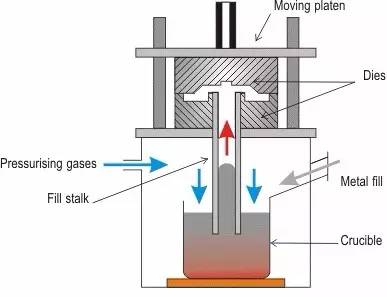
(2) Low pressure casting

Low-pressure casting: refers to a method in which a liquid metal is filled under a lower pressure (0.02 to 0.06 MPa) and crystallized under pressure to form a casting.

Process flow

Low pressure casting process flow chart

Technical features

1. The pressure and speed during pouring can be adjusted, so it can be applied to various casting types (such as metal type, sand type, etc.), casting various alloys and various sizes of castings;

2. Using the bottom injection type filling, the metal liquid filling type is stable, no splash phenomenon, can avoid the entrapment of gas and the erosion of the wall and the core, and improve the pass rate of the casting;

3. The casting is crystallized under pressure. The casting has compact structure, clear outline, smooth surface and high mechanical properties, which is especially beneficial for the casting of large thin-walled parts;

4. Eliminating the need to replenish the riser, the metal utilization rate increased to 90 ~ 98%;

5. Low labor intensity, good working conditions, simple equipment, easy to achieve mechanization and automation.

Application: Mainly based on traditional products (cylinder head, wheel hub, cylinder block, etc.).

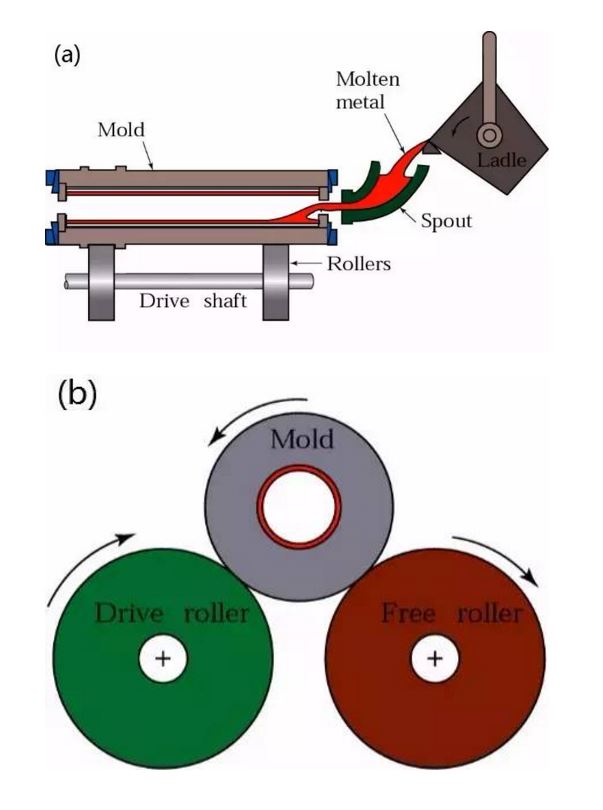
(3) Centrifugal casting

Centrifugal casting: A casting method in which a molten metal is poured into a rotating mold and filled with a mold under centrifugal force to solidify and form.

Process flow

Centrifugal casting process flow chart

Process characteristics

Advantage:

1. There is almost no metal consumption of the gating system and the riser system, which improves the process yield;

2. The core can be used in the production of hollow castings, so the metal filling ability can be greatly improved when producing long tubular castings;

3. The casting has high density, less defects such as pores and slag inclusion, and high mechanical properties;

4, easy to manufacture cylinders, sets of composite metal castings.

Disadvantages:

1. There are certain limitations when used to produce shaped castings;

2. The diameter of the inner hole of the casting is not accurate, the surface of the inner hole is rough, the quality is poor, and the machining allowance is large;

3. Castings are prone to segregation of specific gravity.

Application: Centrifugal casting is used to produce cast pipes earlier. At home and abroad, centrifugal casting processes are used in metallurgy, mining, transportation, irrigation and drainage machinery, aviation, national defense, automotive and other industries to produce steel, iron and non-ferrous carbon alloy castings. Among them, the production of castings such as centrifugal cast iron pipes, internal combustion engine cylinder liners and bushings is more common.

(4) Gravity die casting

Metal casting: refers to a molding method in which a liquid metal is filled with a metal mold under the action of gravity and cooled and solidified in a mold to obtain a casting.

Process flow

Metal casting process flow chart

Process characteristics

Advantage:

1. The thermal conductivity and heat capacity of the metal type are large, the cooling rate is fast, the casting structure is dense, and the mechanical properties are about 15% higher than the sand casting.

2. It can obtain castings with higher dimensional accuracy and lower surface roughness, and has good quality stability.

3, because of the use and rarely use sand core, improve the environment, reduce dust and harmful gases, reduce labor intensity.

Disadvantages:

1. The metal type itself has no gas permeability, and certain measures must be taken to derive the air generated by the cavity and the gas generated by the sand core;

2. The metal type has no repellent property, and the casting is prone to crack when solidified;

3. The metal type has a long manufacturing cycle and high cost. Therefore, only when a large number of batch production, can show good economic results.

Application: Metal casting is suitable for mass production of non-ferrous alloy castings such as aluminum alloys and magnesium alloys with complex shapes, as well as castings and ingots for the production of steel and metal.

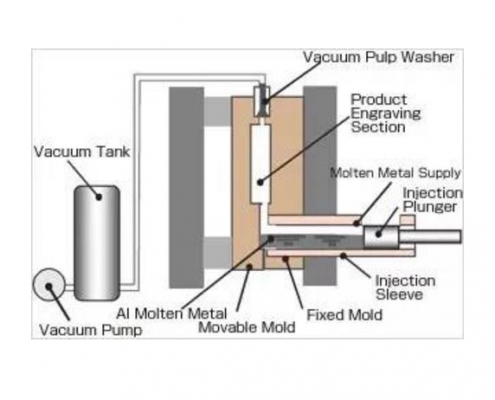
(5) Vacuum die casting

Vacuum casting: An advanced die-casting process that improves the mechanical properties and surface quality of die-casting parts by removing or removing the pores and dissolved gases in the die-casting part by removing the gas in the cavity of the die-casting mold during the die-casting process.

Process flow

Vacuum casting process flow chart

Process characteristics

Advantage:

1. Eliminate or reduce the air holes inside the die-casting parts, improve the mechanical properties and surface quality of the die-casting parts, and improve the plating performance;

2, reduce the back pressure of the cavity, you can use a lower specific pressure and alloy with poor casting properties, it is possible to die cast large castings with a small machine;

3. Improve the filling conditions and die-cast thinner castings;

Disadvantages:

1. The mold sealing structure is complicated, and the manufacturing and installation are difficult, so the cost is high;

2. If the vacuum die casting method is not properly controlled, the effect is not very significant.

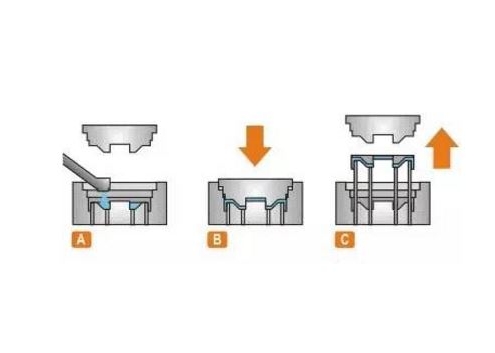
(6) Squeezing die casting

Squeeze casting: A method in which a liquid or semi-solid metal is solidified and flow-formed under high pressure to directly obtain a part or a blank. It has the advantages of high utilization rate of liquid metal, simplified process and stable quality. It is an energy-saving metal forming technology with potential application prospects.

Process flow

Squeeze casting process flow chart

Direct extrusion casting: spray coating, alloy casting, mold clamping, pressurization, pressure holding, pressure relief, parting, blank demoulding, resetting;

Indirect extrusion casting: spray coating, mold clamping, feeding, filling, pressing, holding pressure, pressure relief, parting, blank demoulding, resetting.

Technical features

1. It can eliminate defects such as internal pores, shrinkage holes and shrinkage;

2. Low surface roughness and high dimensional accuracy;

3, can prevent the occurrence of casting cracks;

4. It is easy to realize mechanization and automation.

Application: Can be used to produce various types of alloys, such as aluminum alloy, zinc alloy, copper alloy, ductile iron, etc.

(7) Lost foam casting

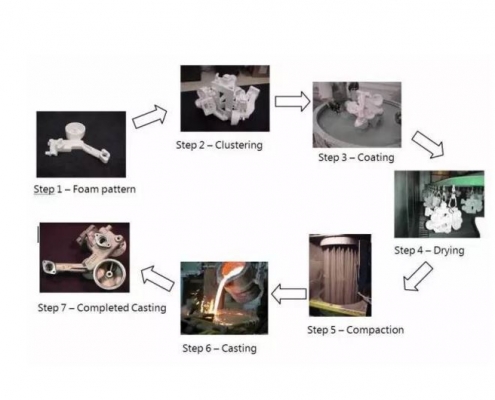
Lost Foam Casting (also known as solid casting): It is a combination of paraffin or foam model similar in shape and shape of casting into a model cluster, brushed with refractory paint and dried, buried in dry quartz sand for vibration modeling, in negative The new casting method of casting is carried out by pressing down the casting to vaporize the model, occupying the position of the liquid metal, and solidifying and cooling.

Process: pre-expansion→foaming molding→dipping coating→drying→styling→casting→falling sand→cleaning

Flow chart of lost foam casting process

Technical features

1. The casting has high precision and no sand core, which reduces the processing time;

2. No parting surface, flexible design, high degree of freedom;

3. Clean production, no pollution;

4. Reduce investment and production costs.

Application: It is suitable for various types of precision castings with complex structure. The alloy type is not limited, and the production batch is not limited. Such as gray cast iron engine box, high manganese steel elbow and so on.

(8)Continuous casting

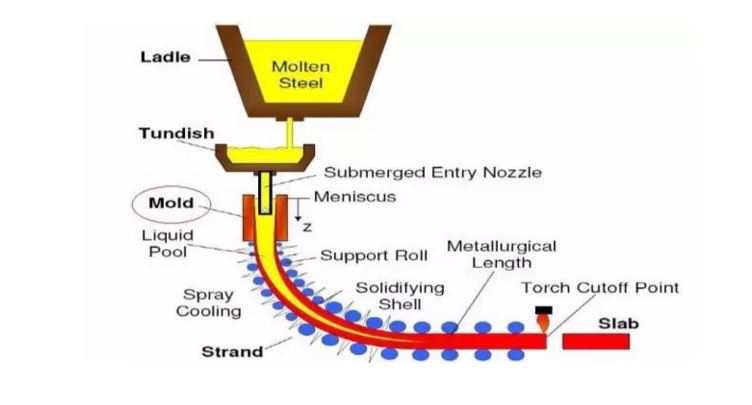
Continuous casting: an advanced casting method, the principle is to continuously cast molten metal into a special metal type called crystallizer, solidify (crusted) castings, continuously from the crystallizer Pull out at one end to obtain castings of any length or length.

Process flow

Continuous casting process flow chart

Technical features

1. Since the metal is rapidly cooled, the crystal is dense, the structure is uniform, and the mechanical properties are good;

2. Save metals and increase the yield;

3. Simplified the process, eliminating the shape and other processes, thus reducing the labor intensity; the required production area is also greatly reduced;

4. Continuous casting production is easy to realize mechanization and automation, and improve production efficiency.

Application: Continuous casting can be used to cast long castings with constant cross-section such as steel, iron, copper alloy, aluminum alloy and magnesium alloy, such as ingots, slabs, billets, tubes, etc.


In the production process of lost foam, model manufacturing is an important link. The selection of EPS raw materials, the accuracy of model processing, the density of the model, and the thermal decomposition products during casting all have important influences on obtaining high-quality castings.

1) Model manufacturing

At present, the common mold making methods are as follows:

A) cutting and adhering with EPS sheet;

B) design drawings by themselves, and external processing;

C) Self-made simple prefabricated equipment.

The use of the above method to produce models generally does not pay attention to the phenomenon of density change of the pattern, especially when it is difficult to control the moisture in the processing of the external factory, and often there is a phenomenon that the molten iron is sprayed backwards or the castings are cold and poorly poured.

Therefore, in the production process, by strengthening the test of the density of the model, increasing the drying time of the model and other measures to solve, if conditions permit, it is best to slowly dry with an electric kiln to ensure that the drying is slow and complete, and the appearance is not deformed. After the EPS particles are selected by experiment, they cannot be changed arbitrarily and strictly tested.

2) Problems with vibration

Vibration compaction is the four key technologies of the lost mode. The vibration action causes the dry sand to generate dynamic flow in the flask, which improves the solidity and density of the dry sand and prevents casting defects. In the dry sand vibration filling, the ideal state is: the dry sand is in an orderly flow during the vibration process, and the model is uniformly deformed to uniformly fill the various parts of the model to make the model obtain higher and more uniform. Filling density.

However, in the process of vibration, the phenomenon of pattern deformation and cracking of the coating layer often occurs. The analysis mainly involves the phenomenon that the excitation force is too large, and the polarization block of the same group of motors is unbalanced. Therefore, the vibration force, amplitude and vibration time are mainly adjusted. For large and simple castings, vertical or horizontal vibrations can be used to reduce the amplitude. In addition, the sand particle size is reasonable, which can ensure the tightness and ensure the breathability.

3) Problems with the use of paint

In the lost foam casting, the use of the coating can improve the strength and rigidity of the pattern, and isolate the EPS pattern from the sand type to prevent the occurrence of sticking sand and mold collapse. During the casting process, the pyrolysis products of the pattern are smoothly discharged through the coating. The layer is generally composed of a refractory material, a binder and a suspending agent. A proper ratio of each composition is required to achieve good results. If the ratio and preparation process are changed at will, the performance of the coating will be greatly reduced. Such as reducing aggregates, reducing suspending agents, mixing time and so on.

In the drying process of the pattern, the first drying can be carried out completely for the next spraying, and the moisture can not be stored in the pattern. Sometimes only the drying method is adopted in summer. Due to the slow drying time, the uniformity of the coating is lowered, and the drying is not thorough, which causes the sand to be partially stuck in the casting, and causes back spray or pores during pouring. In addition, the thickness of the coating should vary with the wall thickness of the casting, and the thick-walled casting should be thicker and thinner. The coating is preferably sprayed to ensure a uniform coating.

4) Problems in the pouring process

For lost foam casting, in order to remove gas and vaporized residue during casting, the sprue should have sufficient height to ensure that the molten metal has sufficient pressure head. The pouring cup should be large enough to make the molten metal fill quickly, to ensure the contour of the casting is clear. Since the lost foam casting adopts the negative pressure dry sand vacuum vibration modeling, the casting strength is much larger than the wet strength and the negative pressure is adopted. The method can improve the stability of the mold. It is necessary to promptly remove the pyrolysis oxidation products generated during the gasification of the sample. If it is not handled properly, it will cause casting defects.

Therefore, the negative pressure is adjusted according to the actual situation in production. When pouring, start pouring slowly and then pour quickly to ensure that the gas is smoothly discharged from the mold.

In the lost foam casting, the foam coated with refractory coating is placed in a sand box, and the surrounding of the pattern is filled with dry sand. The microseismic and negative pressure are used to compact the liquid metal without casting the core, in the casting and A new casting process that continues to maintain a constant negative pressure during the solidification process to vaporize the foam and then replace it with metal to form a casting.

1. The process flow of lost foam casting is as follows:

1) Pre-expansion

Model production is the first process of the lost foam casting process. Complex castings, such as cylinder heads, require several foam models to be separately fabricated and then glued into a single overall model. Each block model requires a set of molds for production. In addition, a set of tires may be needed in the gluing operation to maintain the accurate positioning of each block. The molding process of the model is divided into two steps. The first step is to Polystyrene beads (EPS) are pre-expanded to a suitable density, typically by rapid steam heating, which is referred to as pre-expansion.

2) Model molding

The pre-expanded beads are first stabilized, then sent to the hopper of the molding machine, and fed through the feeding hole. After the mold cavity is filled with the pre-formed beads, steam is introduced to soften the beads. Expanding, squeezing all the voids and bonding them together completes the manufacturing process of the foam model, which is called autoclaving.

After molding, the model is cooled by a large flow of water in the water-cooling cavity of the mold, and then the mold is opened to take out the model. At this time, the model temperature is high and the strength is low, so care must be taken during demolding and storage to prevent deformation and damage. .

3) Model cluster combination

Before the model is used, it must be stored at the appropriate time to make it mature. The typical model storage period is up to 30 days. For the model formed by the uniquely designed mold, it only needs to be stored for 2 hours. After the model is matured, it can be divided. The block model is glued together. The mass-produced castings must be bonded to the automatic bonding machine using a hot-melt adhesive to ensure the bonding accuracy. Castings produced in small and medium-sized batches can be used, hand-bonded with cold glue, and the joints of the glued surfaces should be tightly sealed to reduce the possibility of casting defects.

4) Model cluster dip coating, drying

In order to produce more castings per box casting, sometimes many models are glued into clusters, the model clusters are immersed in refractory coatings, and then dried in air circulating ovens of about 30~60C (86-140F) for 2~3 After the hour, after drying, put the model cluster into the sand box, and fill the dry sand to make the vibration tight. The internal cavity of all the model clusters and the dry sand of the periphery must be tight and supported.

5) Pouring

After the model cluster is filled in the sandbox by the dry sand vibration, the vacuum is vacuumed to form a negative pressure to strengthen the compactness. The mold can be poured. After the molten metal is poured into the mold, the model gasification is replaced by metal to form a casting. In the lost foam casting process, the casting speed is more critical than conventional hollow casting. If the casting process is interrupted, the sand pattern may collapse and cause waste. Therefore, in order to reduce the difference between each casting, it is best to use an automatic pouring machine.

6) Falling sand cleaning

After the pouring, the vacuum is released for a while, the vacuum is released, the casting is solidified and cooled in the flask, and then the sand is dropped. Casting sand is quite simple, and the tilting sandbox castings fall out of the loose dry sand. The castings are then automatically separated, cleaned, inspected and placed in a casting box for transport. The dry sand can be reused after being treated and cooled by the sand treatment system, and other additional processes are rarely used, and the metal scrap can be remelted in production.

2. Advantages of the lost foam casting process

1) High precision of castings Lost-die casting is a new process with almost no allowance and precise molding. This process does not require mold taking, no parting surface, no sand core, so the casting has no flash, burr and draft angle, and The dimensional error caused by the core combination is reduced, the surface roughness of the casting can reach Ra3.2 to 12.5μm; the dimensional accuracy of the casting can reach CT7 to 9; the machining allowance is at most 1.5 to 2mm, which can greatly reduce the machining The cost can be reduced by 40% to 50% compared to conventional sand casting methods.

2) Flexible design: Provides sufficient freedom for the structural design of the casting. Highly complex castings can be cast by foam molding.

3) There is no sand core in traditional casting, so there is no uneven wall thickness of the casting due to inaccurate sand core size or inaccurate core position in traditional sand casting.

4) There is no chemical binder in the clean production sand. The foam is harmless to the environment at low temperature, and the recovery rate of the old sand is over 95%.

5) Reduce investment and production costs to reduce the weight of casting blanks, and the machining allowance is small.

Therefore, lost foam casting technology is in line with the general trend of casting development: it has broad development prospects.

3. Disadvantages and limitations of the lost foam casting process

The lost foam casting process and other casting processes have their shortcomings and limitations. Not all castings are suitable for production by the lost foam process, and specific analysis is required. The use of this process is mainly based on the following factors.

1) The batch size of castings is larger, and the economic benefits are more impressive.

2) The order of good and poor applicability of casting materials is roughly: gray cast iron – non-ferrous alloy – ordinary carbon steel – ductile iron – low carbon steel and alloy steel, because the foam is burned and decomposed during the casting process The effect of the substance on the alloy solution is different. For example, for steel castings with low carbon content, the use of lost foam casting may cause carbonation problems in the casting skin. Therefore, it is necessary to make necessary preparations before production to prevent the process experiment and debugging cycle from being too long.

3) The size of the casting mainly considers the scope of use of the corresponding equipment.

4) Casting structure The more complicated the structure of the casting, the better the economical and economic benefits of the lost foam casting process. For the case of a narrow internal cavity channel and interlayer, it is necessary to carry out the experiment before the lost foam process before it can be put into production. . For some simple conditions, the sand casting method can also produce high quality castings, and the production efficiency and casting cost are lower than that of the lost foaming process. In this case, the lost foam casting method is not necessarily used.

4. Development status of the lost foam casting process in China:

Through years of production practice, China’s enterprises using the lost foam technology for casting production have grown from less than ten in the initial stage to hundreds of current ones. There are many successful examples of lost foam casting production in China, and there are quite a few companies that have not achieved the expected results. Analysis of successful experience and failure lessons, the key to the development prospects of lost foam casting in China is the degree of awareness of this process, which lies in the optimal control of the production system of the process, including raw materials, coating technology, dry sand tight Real technology and optimized control of lost foam casting process technology.

1) Optimized control of raw materials

The raw materials required for lost foam casting production are roughly divided into model raw materials, dry sand raw materials, coating raw materials, and alloy melting raw materials. Since the lost foam casting process is a system engineering, the selection of raw materials is particularly important. Therefore, controlling the quality and parameters of various raw materials has become the basis for the success or failure of lost foam casting.

Model materials are often referred to as beads, and the beads used in casting are generally classified into two types, namely, EPS Polystyrene beads and polymethyl methacrylate (PMMA-PolymethyI Methacrylate beads, both Belongs to polymer materials. There is another
EPS+PMMA polymer. For low carbon steel castings, the carbon in the model material tends to cause carbonization on the surface of the casting, resulting in various carbon defects. Among them, EPS (containing 92% carbon), EPS+PMMA copolymer, and PMMA (60% carbon) have a decreasing effect on the carbonation of castings. In addition, the density of the model is an important control parameter for its gas generation. The gas generation of the above three materials is EPS, PS+PMMA copolymer and PMMA. At the same time, the size of the beads should be selected according to the wall thickness of the castings produced. In general, the thick castings use beads of coarser diameter, whereas the thin-walled castings use beads of finer size to make the castings the thinnest. It is preferred to keep more than three beads in the part.

In addition, the pre-fabrication and forming control of the model material is also a key to technical success. In general, the pre-beads have a density controlled at about 0.024 to 0.03 g/cm3 and a volume of about 30 times the original bead volume. The density of the formed model is controlled to be about 0.02 to 0.025 g/cm3.

Dry sand is a modeling material for lost foam casting. Due to the characteristics of the process, the choice of dry sand should be related to the material of the casting produced. The high-temperature alloy is made of dry sand with high refractoriness and coarse particles. At present, the dry sand mainly uses natural quartz sand, and the iron slag, dust and moisture in the sand should be removed, and the use temperature is not higher than 50C.

Coatings are an indispensable ingredient in lost foam casting, and many foundries now use homemade coatings. The main role of the coating is to improve the strength and rigidity of the model, to prevent damage or deformation; to isolate the molten metal and mold; to exclude the model gasification products; to ensure the surface quality of the casting. The refractory aggregates in the lost foam coating mainly include zircon powder, bauxite, brown corundum powder, quartz powder, talc powder, mullite powder, mica powder and the like. The particle size distribution should take into account the prevention of sand sticking and high temperature gas permeability. The grain shape is beneficial to improve the gas permeability. Usually, a certain amount of spherical particles is selected, which is beneficial to the gas escape after the model gasification or the liquefied product whose model is not completely decomposed. exclude.

2) Control of paint preparation

The carrier of the lost foam casting coating is mostly water-based to facilitate environmental protection. The binder mainly includes clay, water glass, syrup, pulp waste liquid, white latex, silica sol and the like. In the selection of adhesives, the following factors are considered: high temperature gassing: coating properties; coating strength and stiffness; etching modelability. Suspending agents are used to prevent deposition, delamination, and agglomeration of the coating, making the coating thixotropy. Bentonite, attapulgite clay, organic polymer compounds, and composites thereof are generally used. In addition, surfactants need to be added to the lost foam coating to increase the coating properties of the coating and improve the affinity and bonding strength of the coating with the surface of the model. In addition, other additives such as defoamers, water reducing agents, preservatives, pigments and the like are often added.

For this reason, the coating is required to have good strength, gas permeability, refractoriness, heat insulation, rapid cooling resistance, hygroscopicity, cleanability, coating property, suspension property and the like. The combination mainly includes work performance and process performance.

The working properties of the coating include strength, gas permeability, refractoriness, thermal insulation, rapid cooling resistance, etc., mainly in the casting and cooling process, the most important of which is strength and gas permeability. The process properties of the coating include coating properties, suspension properties, etc., mainly in the performance required in the coating operation.

Generally, the water-based paint is mostly used for lost foam casting, and the paint and the model are generally not wetted, thereby requiring improvement of the coating property of the water-based paint. The coating property refers to the suspension drying after the coating is applied to the model. It is hoped that the coating will not drip as soon as possible after coating, ensuring the uniformity of the coating layer and reducing environmental pollution. Suspension refers to the uniformity of the density of the coating during the use of the coating, and no deposition occurs.

Coating process control is a key part of coating technology. Domestic coatings are mostly milled, roller mixed or stirred. According to the production practice, the mixing and mixing of the rolls is better than the mixing. It is recommended that qualified companies use the mixing or roll mixing method to make coatings.

Due to the different effects of different alloys on the coating, it is recommended to develop corresponding coatings according to the different types of alloys, such as cast iron coatings, cast steel coatings, non-ferrous alloy coatings. In the coating configuration and mixing process, reasonable aggregate grading should be used as much as possible to make the aggregate and binder and other additives evenly mixed.

In addition to the coating properties that meet the requirements, the coating and drying process also has an impact on production. Dip coating is used in production, preferably once. It can also be applied in two portions, but it should be dried after each application. Pay attention to the uniformity of drying temperature and drying time during drying to ensure that the coating is completely dry without cracking.

3) Control of dry sand modeling process

Dry sand molding is to embed the model into the sand box, and perform vibration compaction on the vibration table to ensure that the dry sand around the model is filled in place and obtain a certain degree of compactness, so that the molding sand has sufficient strength to resist the impact and pressure of the molten metal. .

The first step of dry sand molding is to add dry sand to the sand box. In order to ensure the filling of the dry sand in the sanding, first add a certain thickness of the bottom sand in the sand box and vibrate it tightly, then put it into the model cluster and then add it. A certain thickness of dry sand, the model cluster is buried in one-third to one-half, and then appropriate vibration to promote dry sand filling the model cavity. Finally, fill the sand box for vibration, the vibration time should not be too long, to ensure that the model does not appear damage and deformation, and at the same time ensure that the paint layer does not fall off and crack.

The vibration parameters should be selected according to the structure of the casting and the form of the model cluster. For most castings, vertical one-way vibration should be used. For castings with complex structures, one-way horizontal vibration or two-dimensional and three-dimensional vibration can be considered. The magnitude of the vibration intensity has a great influence on the shape of the dry sand, and the vibration intensity is expressed by the vibration acceleration. For castings and model clusters of general complexity, the vibration acceleration is between 10 and 20 m/s2. The amplitude is an important vibration parameter that affects the model to maintain a certain stiffness. The amplitude of the lost foam casting is generally 0.5~1mm [4]. The choice of vibration time is subtle and should be selected in conjunction with the casting and model cluster structure. However, the overall vibration time is about 1~5min. At the same time, the vibration time of the bottom sand and the model cluster buried in half should be as short as possible. It can be selected for 1~2min. The vibration time after the model cluster is fully embedded is generally controlled at 2~3min.

4) Control of casting process

The lost foam casting process includes the design of the riser system, the pouring temperature control, the pouring operation control, and the negative pressure control.

The gating system plays an important role in the lost foam casting process and is a key to the success of casting production. In the design of the gating system, the particularity of this process should be taken into consideration. Due to the existence of the model cluster, the behavior of the molten metal after pouring is very different from that of the sand casting. Therefore, the design of the gating system must be different from the sand casting. When designing the cross-sectional dimensions of each part of the gating system, the resistance due to the existence of the model during the casting of the lost foam casting metal solution should be considered, and the minimum flow blocking area should be slightly larger than the sand casting.

Due to the wide variety of castings and the different shapes, the specific production processes of each casting have their own characteristics and vary widely. These factors directly affect the accuracy of the design results of the gating system. For this purpose, the castings can be sorted in some way. The combination of model clusters can basically reflect the characteristics of the casting and the form of the filling of the casting. The cross-sectional dimensions of each part of the gating system are related to the size of the casting, the combination of the model clusters, and the number of pieces per box. For this reason, in the process of designing new castings, the calculation should be carried out in a targeted manner according to the characteristics of the castings and with reference to the characteristics of the casting system of the same type.

Casting classification

Model and model cluster combination Application range Feeding method
One box Larger casting Riser feeding
Combined on the sprue (without sprue) Small casting Spurt (or riser) feeding
Combined on the runner Small casting Sprue (or riser) feed
Combined on the riser Small casting Riser feeding

Because of the existence of the model, the model gasification needs to absorb heat during the casting process, so the casting temperature of the lost foam casting should be slightly higher than that of the sand casting. For different alloy materials, the casting temperature of the lost foam casting is generally controlled to be 30~50 higher than that of the sand casting compared with the sand casting. This is 30~50 higher than the heat of the molten metal to meet the heat required for model gasification. If the casting temperature is too low, the casting is prone to defects such as insufficient pouring, cold separation, and wrinkle. Casting temperatures are too high, castings are prone to defects such as sand.

The most taboo of the lost foam casting casting operation is intermittent casting, which is easy to cause cold insulation defects in the casting, that is, the temperature of the molten metal poured first decreases, resulting in a cold separation between the molten metal and the post-casting metal. In addition, the lost foam casting system mostly uses a closed casting system to maintain the smoothness of the casting. In this regard, the form of the gate cup is closely related to whether the pouring operation is stable. When pouring, keep the liquid level in the pouring cup stable and make the pouring dynamic head stable.

Negative pressure is a necessary measure for lost foam casting of black alloys. The role of negative pressure is an important guarantee for increasing the strength and stiffness of sand, and it is also the main measure to eliminate the gasification products of the model. The size and retention time of the negative pressure is related to the material of the casting and the structure of the model cluster and the coating. For coatings with good gas permeability and coating thickness less than 1mm, the negative pressure on cast iron parts is generally 0.04~0.06MPa, which is the upper limit for steel castings. For the cast aluminum parts, the negative pressure is generally controlled at 0.02~0.03MPa. The negative pressure holding time depends on the model cluster structure. When the number of model clusters in each box is large, the negative pressure holding time can be appropriately extended. Generally, the solidified crust of the surface of the casting reaches a certain thickness, but the negative pressure is removed. For thicker coatings and poorer gas permeability of the coating, the negative pressure and holding time can be appropriately increased.